

Populonia: what to see in the Etruscan village on the Gulf of Baratti
Castle, Acropolis and necropolises of the only Etruscan city built by the sea
Populonia is a small walled village at the top of the headland that closes the Gulf of Baratti. A few lanes, a castle with its tower and a sea view that alone is worth the trip. Below and around the village lies one of the most important archaeological sites in Italy: here stood Pupluna, or Fufluna, traditionally counted among the twelve cities of the Etruscan league and the only one built on the coast.
Visiting Populonia means combining a medieval village, the remains of an Etruscan and Roman city, the necropolises and, if you like, the sea, all in one day.
Where is Populonia
Populonia is a village in the municipality of Piombino, province of Livorno, about 170 metres above sea level on the Piombino headland, on the Etruscan Coast. Follow the signs for Baratti and then climb up to Populonia Alta; not to be confused with Populonia Stazione, the small settlement on the plain a few kilometres away.
Approximate driving time: 10 minutes from Baratti, about 25 minutes from the centre of Piombino, about half an hour from Campiglia Marittima, Venturina Terme and San Vincenzo.
Request a quote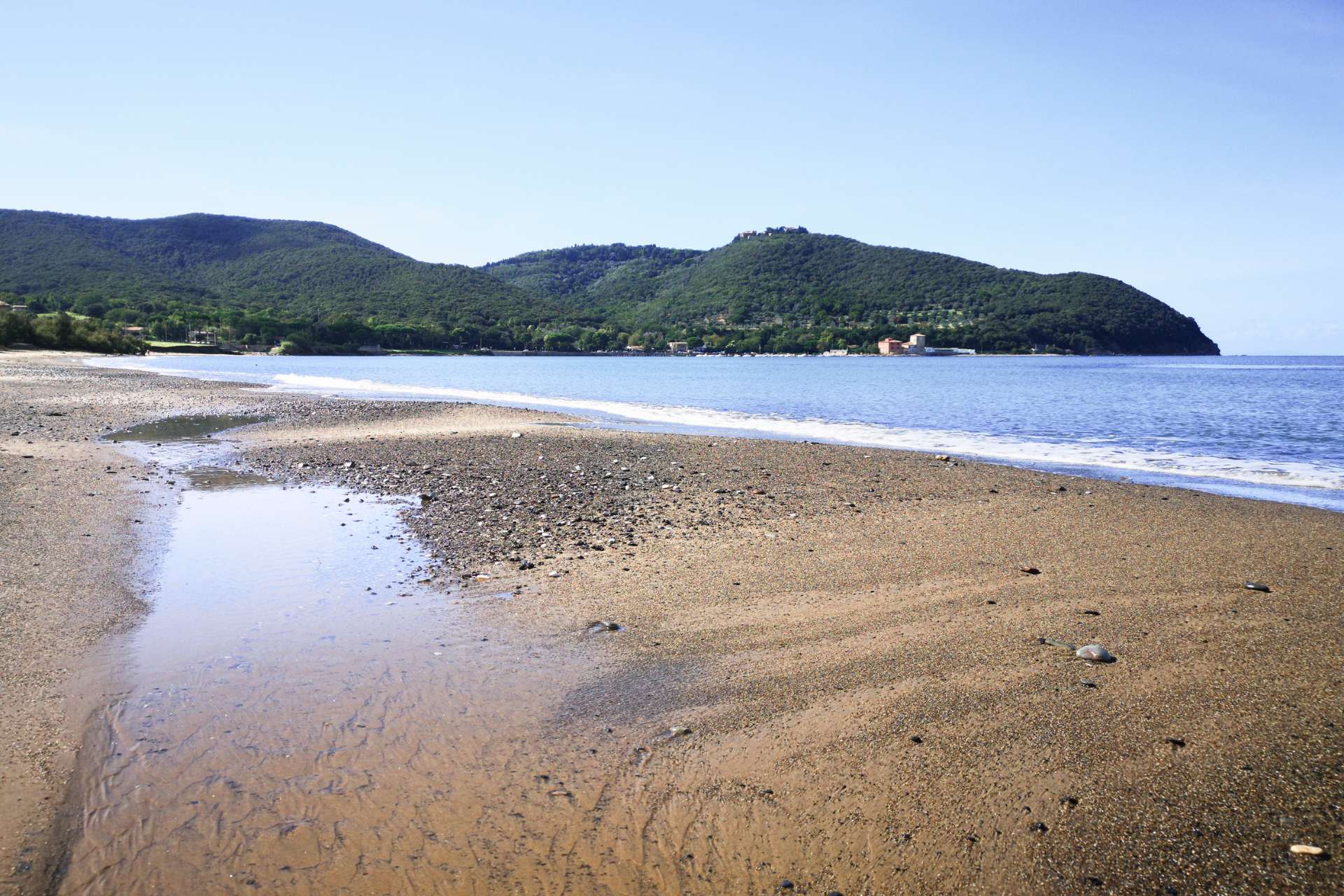
What to see in Populonia: the highlights
- Populonia Castle, with the Appiani fortress and the Pisan tower, and the view over the gulf.
- The medieval village, with its three parallel streets and the church of Santa Croce.
- The Etruscan Museum – Gasparri Collection, the oldest museum in the Val di Cornia.
- The Acropolis, with temples, the Via Sacra, mosaic houses and the Logge.
- The San Cerbone and Grotte necropolises, in the lower part of the Archaeological Park.
- The Archaeological Museum of the Territory of Populonia, in Piombino, with the Baratti Amphora.
- The Gulf of Baratti and the coves of the headland, such as Buca delle Fate.
The village alone takes an hour; with the Acropolis allow at least half a day, with the necropolises a full day.
Populonia Castle: the fortress and the tower
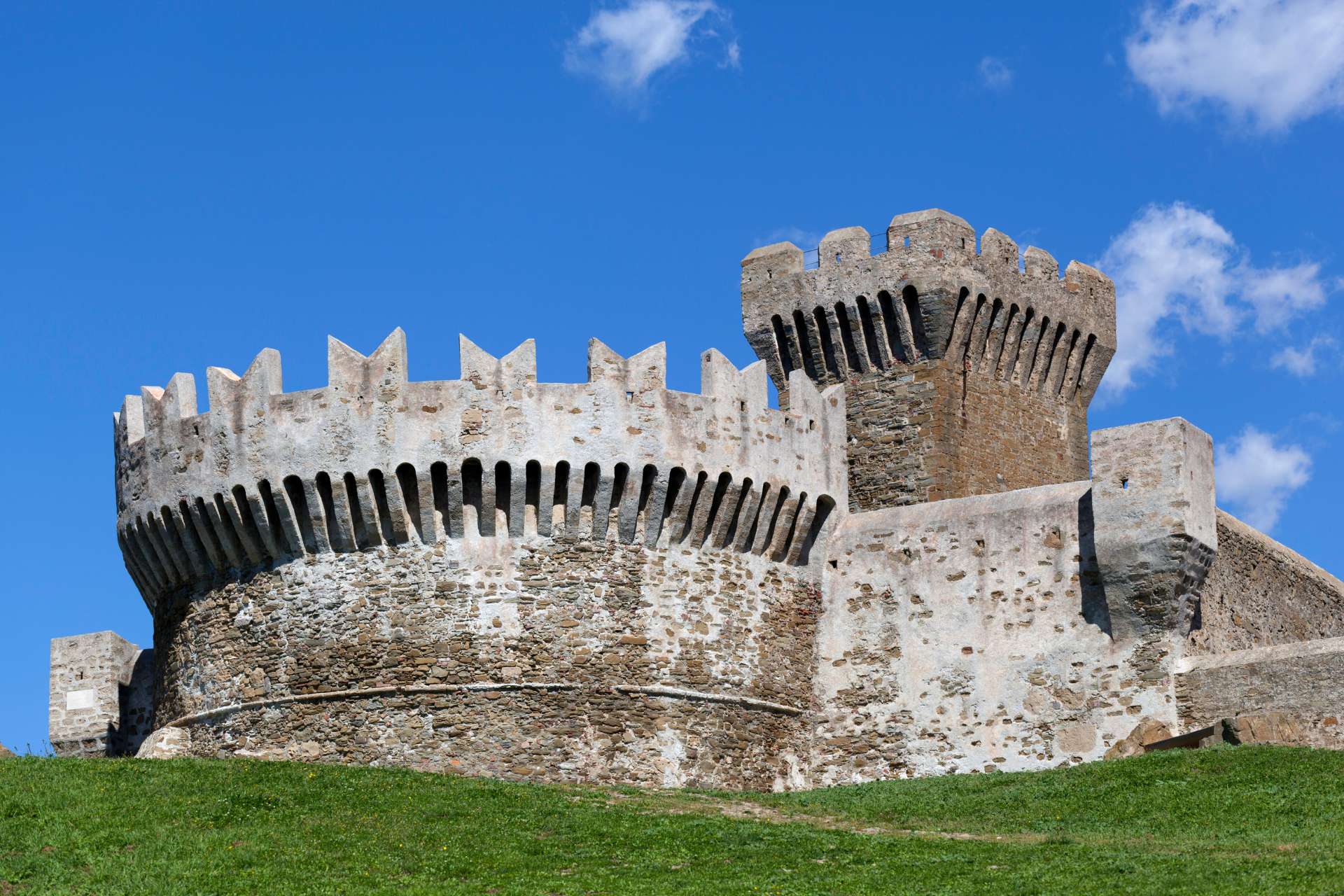
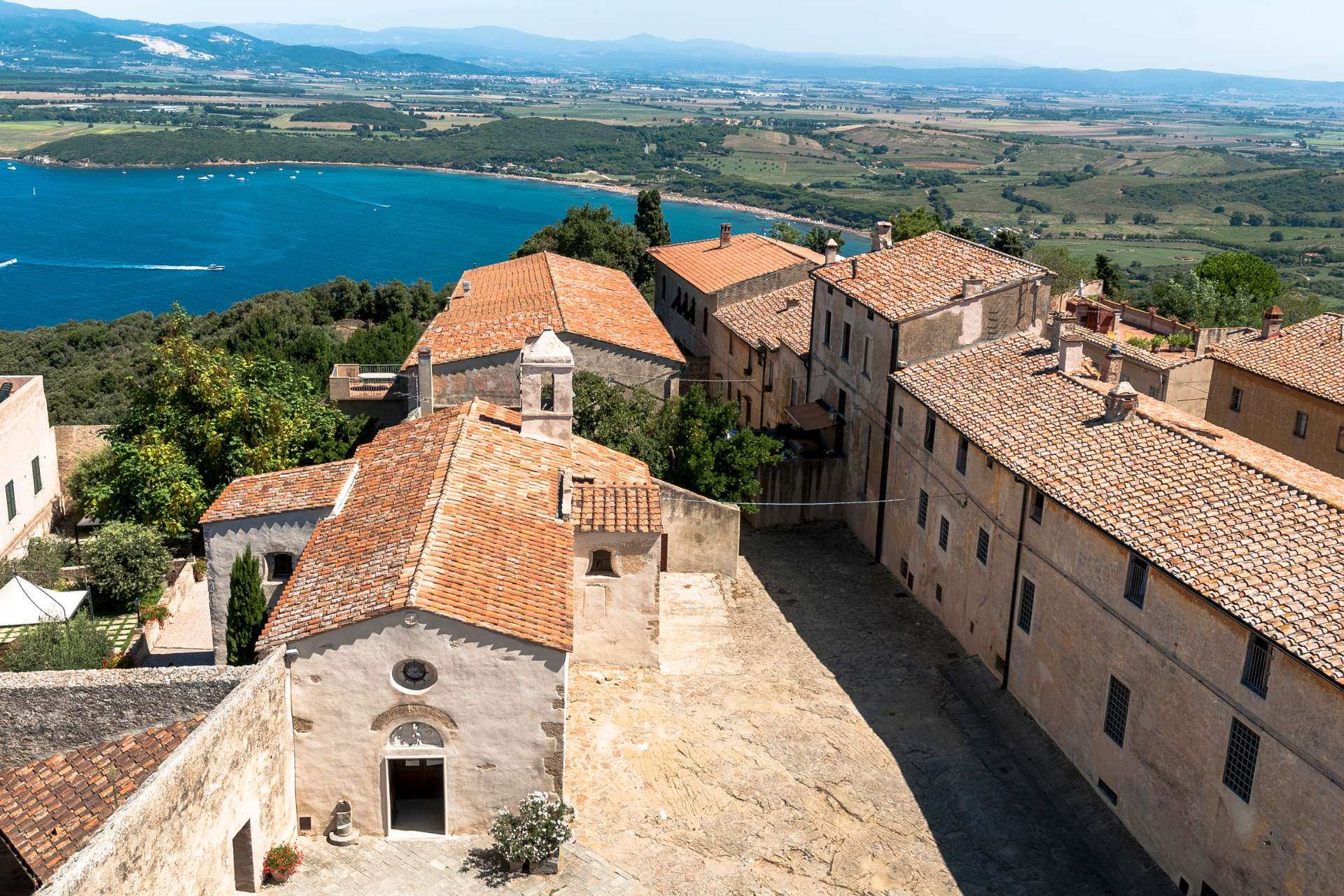
What everyone calls Populonia Castle is actually two buildings. The oldest part is the tower, a watchtower built in the Middle Ages under Pisan rule. In the early 15th century the Appiani family, lords of Piombino, added the fortress (Rocca), completed around the middle of the century, and surrounded the village with walls to attract new inhabitants.
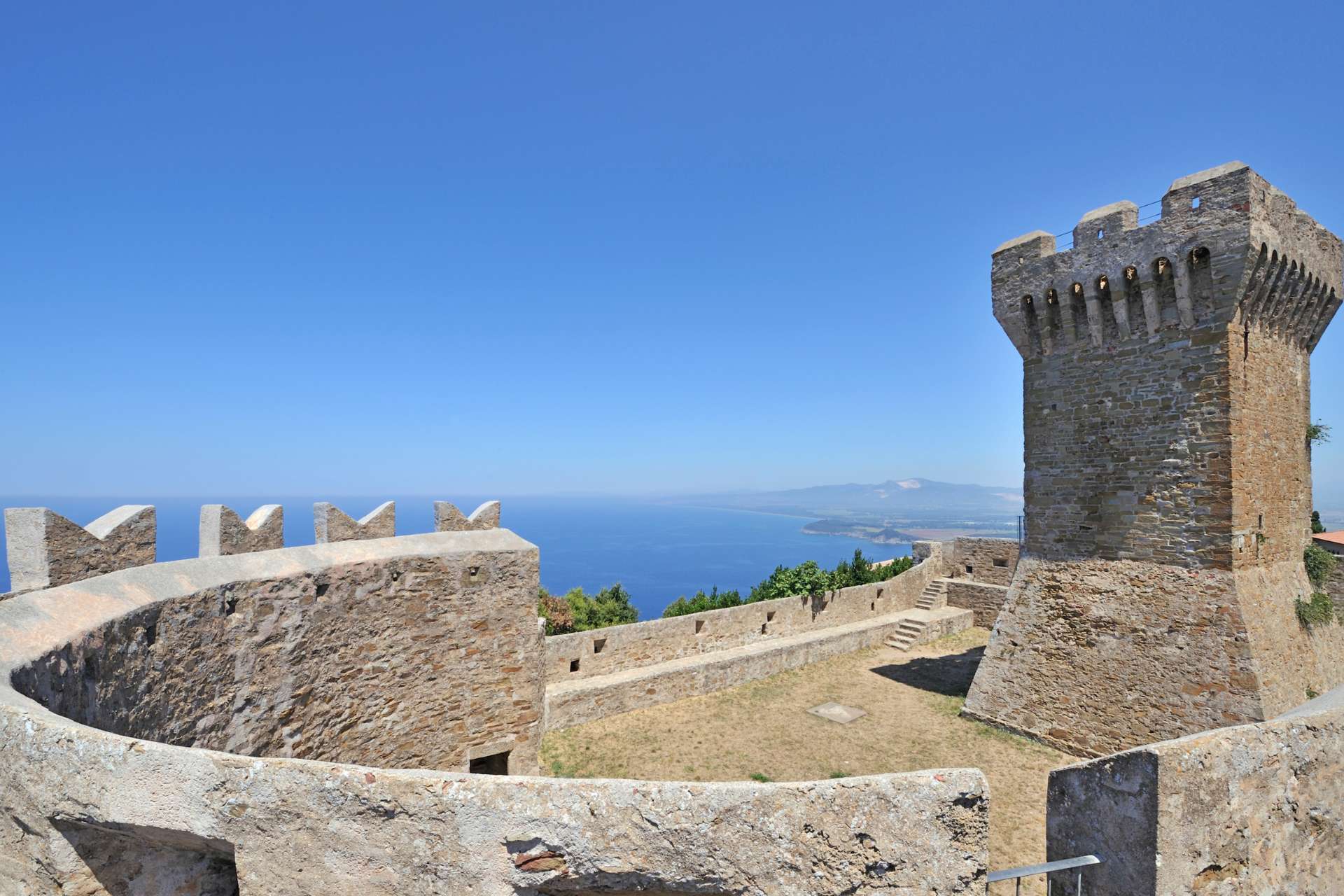
From the top of the headland the view is one of the widest on the Tuscan coast: the Gulf of Baratti, the Island of Elba, Capraia, Gorgona and, on the clearest days, the coast of Corsica.
The castle is privately owned: it has belonged to the Gasparri family since 1936. To find out whether and when you can visit and climb the tower, ask at the Etruscan Museum in the village.
The medieval village
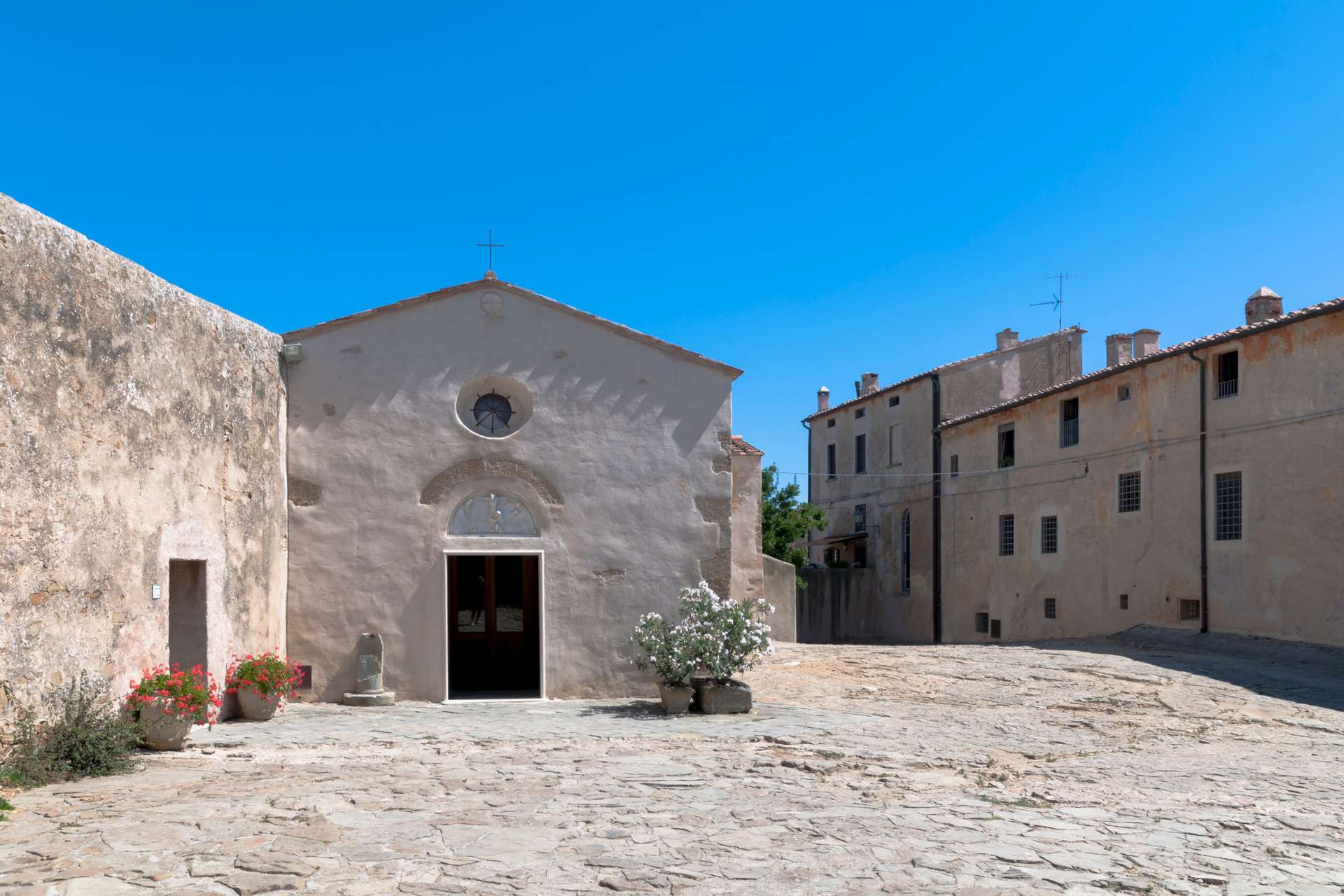
Inside the walls the village is a small, compact world: three parallel streets with low stone houses, craft and local produce shops, and the 15th-century single-nave church of Santa Croce. The centre is a limited traffic zone and is explored on foot.
The Etruscan Museum of Populonia – Gasparri Collection
In the castle’s old olive mill is the Etruscan Museum of Populonia, born from the Gasparri family collection and considered the oldest museum in the Val di Cornia. It is private and makes a good introduction before going up to the Acropolis:
- grave goods from the necropolises;
- the Sea Room, with amphorae and anchors recovered from the seabed;
- a large 1st-century AD Roman dolium, almost two metres tall;
- stone sarcophagi and cippi.
The Archaeological Museum of the Territory of Populonia, in Piombino
To complete your visit it is worth going down to Piombino, where Palazzo Nuovo houses the Archaeological Museum of the Territory of Populonia: more than 2,000 finds on three floors, from prehistory to late antiquity. The most famous pieces are the Baratti Amphora, made of almost pure silver and recovered from the sea in 1968, and the Fish Mosaic, which decorated the Logge building on the Acropolis.
The Acropolis of Populonia
The Etruscan and later Roman city occupied the heights of Poggio del Castello, where the village stands, and Poggio del Telegrafo. In the upper part of the Archaeological Park of Baratti and Populonia, the Acropolis is one of the most panoramic archaeological sites in Tuscany, with the sea always in view. Along the route you see:
- the Roman temples overlooking a large square, with the reconstructed foundations of one of them;
- the Via Sacra, the paved road crossing the sacred area;
- a large domus with mosaic floors;
- the Logge building, a monumental terrace that supported the buildings above;
- the baths and the nymphaeum, where excavations are still under way;
- the ancient walls and, in the educational area, the reconstructed Casa del Re and a Villanovan hut.
The visit takes about an hour and a half, on an easy route with some slopes and steps. You can go on your own following the panels, or join the guided tour included in the ticket, at set times. The Acropolis has its own entrance at Populonia Alta, with a visitor centre and ticket office.
The necropolises and the Archaeological Park of Baratti and Populonia
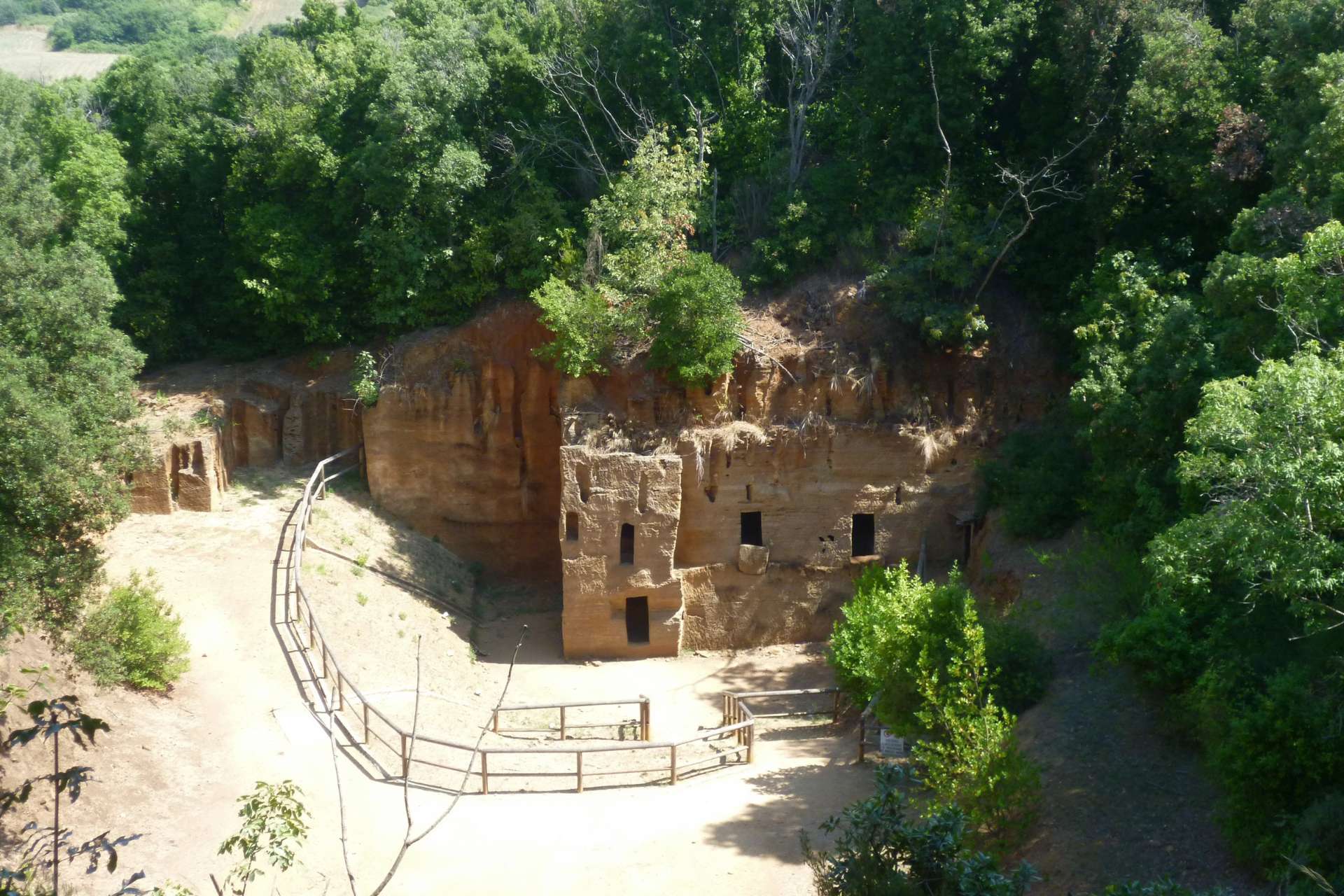
In the lower part of the park, near the Gulf of Baratti, are the two great Etruscan necropolises: San Cerbone, with its monumental mound tombs, and the Grotte, with chamber tombs carved into the rock along the ancient sandstone quarries. From the necropolis you can also walk up to the Acropolis, on demanding trails of about two and a half hours.
Populonia was the Etruscan city of iron: ore from the Island of Elba was processed here, and the park also has the remains of the industrial quarters where this took place. In 2023 the park was named the best archaeological site in Italy.
Tickets and opening hours
The full ticket covers the Acropolis, the Grotte necropolis and San Cerbone (around €27, with reduced tickets for children and over-65s and a family ticket); tickets for one or two areas are also available. In summer the park is open every day; for the rest of the year it usually closes on Mondays and at times opens only at weekends. Check prices and the calendar on the Val di Cornia Parks website before you go. More details on the park are on the Baratti page.
A short history of Populonia
- From the 9th century BC: the first villages on the heights of the headland.
- Etruscan era: Pupluna grows very rich from processing iron from Elba and minerals from the Campiglia area, and mints its own coins.
- 205 BC: according to Livy, Populonia supplies the iron for Scipio’s fleet.
- 1st century BC: during the civil wars between Marius and Sulla the city is besieged; a slow decline follows, while the port remains active.
- 6th century: Populonia is a bishopric; after the arrival of the Lombards, Bishop San Cerbone takes refuge on Elba and the inhabitants move towards Piombino.
- 15th century: the Appiani build the fortress and refound the village.
- 1998: the Archaeological Park of Baratti and Populonia opens.
Populonia and the sea: the Gulf of Baratti and the coves
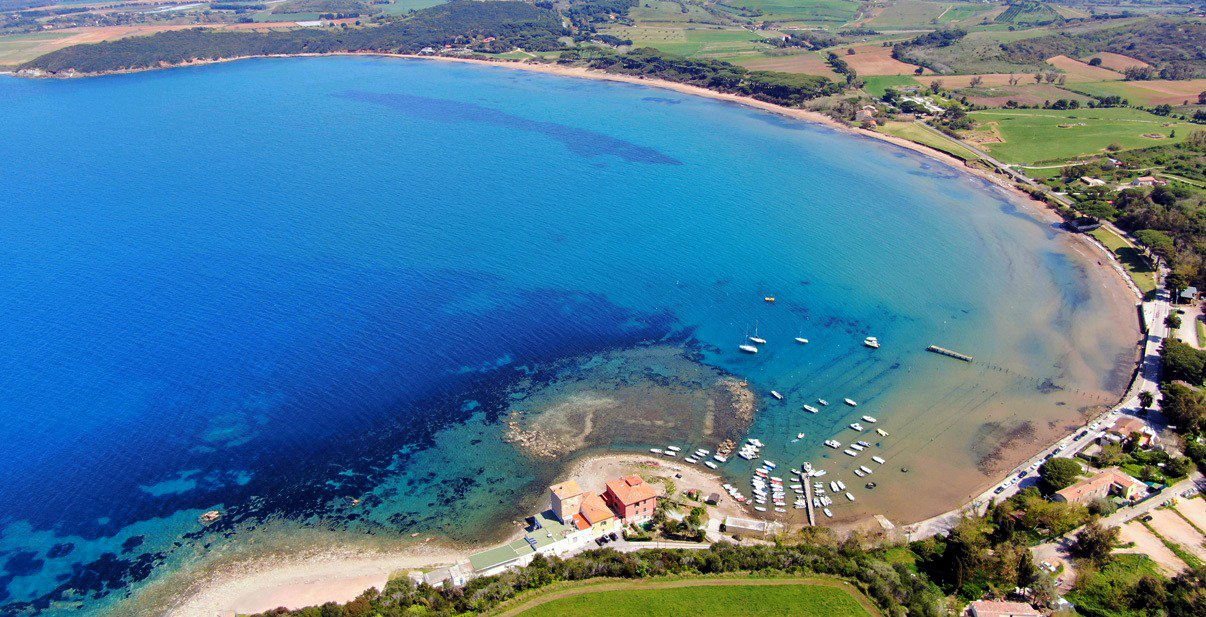
From Populonia it takes a few minutes to drive down to the Gulf of Baratti, a bay of dark sand and pine woods among the most photographed in Tuscany, with free and equipped beaches and a small harbour.
On the other side of the headland, trails lead from the Reciso car park to the rocky coves: Buca delle Fate, about 20 minutes on foot, and Cala San Quirico. On the other side of the headland, towards Piombino, is Cala Moresca.
Populonia in one day: an itinerary
- Morning: a walk through the village, the castle and the Etruscan Museum.
- Late morning: the Acropolis, with the view over the gulf.
- Lunch: in the village or down in Baratti.
- Afternoon: the San Cerbone and Grotte necropolises, or a swim at Baratti or Buca delle Fate.
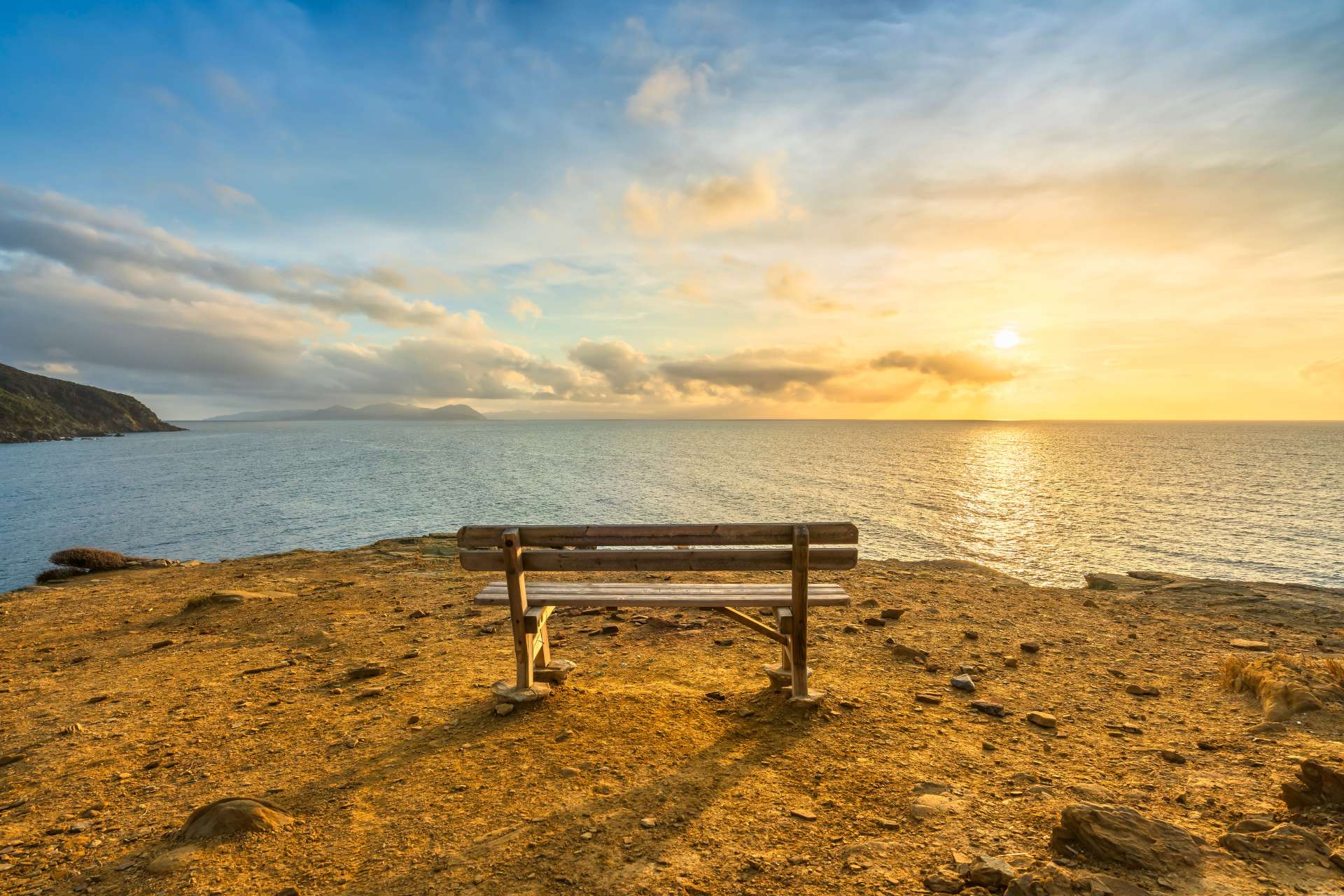
- Sunset: back on the headland, as the sun sets over the sea.
In summer the park also organises evening guided tours of the Acropolis and meetings with the university archaeologists working on the excavations.
How to get there and where to park
By car: from Piombino or the Variante Aurelia follow the signs for Baratti and Populonia; the last stretch up to the village is narrow and steep. The village is visited on foot: leave the car in the paid car park just outside the walls, which fills up early in summer.
By shuttle: at certain times of year a free shuttle runs from the Caldanelle car park in Baratti up to Populonia, a handy way to avoid driving up. For the necropolises, park in the Baratti area, near the Archaeological Park entrance.
When to visit Populonia
The village is lovely all year round. Spring and autumn are ideal for the Acropolis and the necropolises, which are visited outdoors; in summer avoid the hottest hours and combine the visit with the sea at Baratti.
A perfect stop on your holiday
Populonia is one of the finest day trips for anyone staying in the Val di Cornia: in half an hour from Campiglia Marittima you go from the hills to the Etruscan sea. The visit pairs well with the San Silvestro Archaeological Mining Park, which tells the other great story of this land, that of the mines, and with the Rocca di Campiglia.
For beach lovers, the alternatives are Rimigliano Beach and the Sterpaia Park.
Plan your stay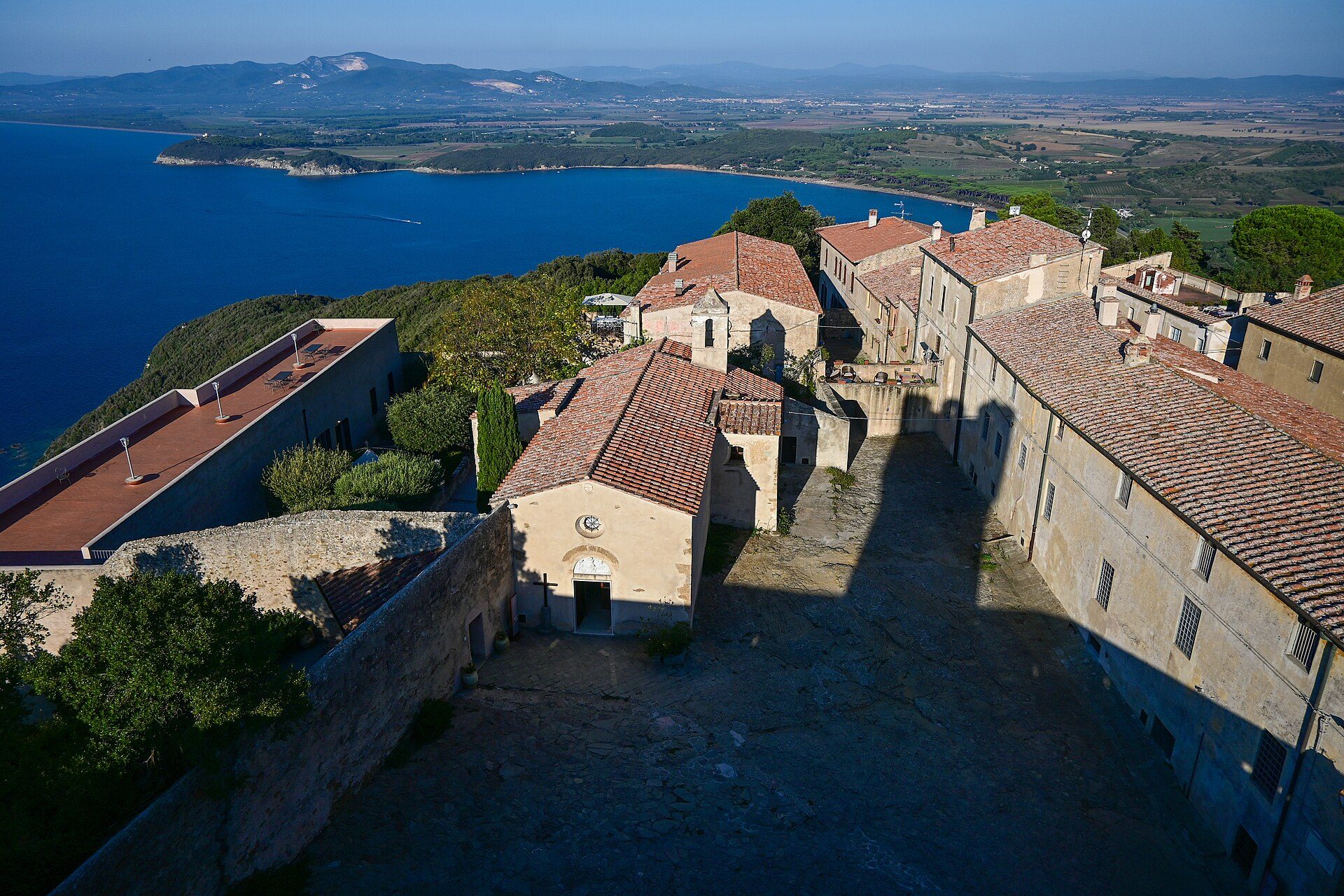
Plan your experience with Ama Campiglia Marittima
Through the Ama Campiglia Marittima portal you can find where to stay, where to eat and which experiences to enjoy between the sea, historic villages and nature in the Val di Cornia, half an hour from Populonia.
Get a quoteFrequently asked questions about Populonia
Where is Populonia?
In the municipality of Piombino, province of Livorno, on the headland that closes the Gulf of Baratti to the south.
What is there to see in Populonia?
The castle with its fortress and tower, the medieval village, the Etruscan Museum – Gasparri Collection, the Acropolis and, in the lower part of the Archaeological Park, the San Cerbone and Grotte necropolises.
Can you visit Populonia Castle?
The castle is privately owned. To find out whether and when you can visit and climb the tower, ask at the Etruscan Museum in the village; on some special days the castle opens for guided tours.
What can you see at the Acropolis of Populonia?
The Roman temples overlooking a large square, the paved Via Sacra, a domus with mosaic floors, the Logge building, the baths, the ancient walls and the reconstructed Casa del Re, with a spectacular view over the Gulf of Baratti.
How much is the ticket for the Acropolis?
The Acropolis is part of the Archaeological Park of Baratti and Populonia: the full ticket, which also includes the necropolises, costs around €27, and tickets for one or two areas are also available. Up-to-date prices are on the Val di Cornia Parks website.
Why is Populonia famous?
Because it was a great Etruscan city, the only one built by the sea, and an important centre for processing iron from the Island of Elba.
Where is the Baratti Amphora on display?
At the Archaeological Museum of the Territory of Populonia, in Piombino, together with the Fish Mosaic from the Acropolis.
How long does it take to visit Populonia?
An hour for the village, half a day with the Acropolis, a full day adding the necropolises or the beach at Baratti.
Where can you park in Populonia?
In the paid car park just outside the village walls; at certain times there is also a free shuttle from the Caldanelle car park in Baratti. The village is visited on foot.
Is Populonia close to the sea?
Yes, it overlooks the Gulf of Baratti, a few minutes away by car. From the Reciso car park you can walk down to Buca delle Fate.
When is the best time to visit?
Spring and autumn for the archaeological sites; in summer go early in the morning or late in the afternoon, combining the visit with the sea.
Photo credits (via Wikimedia Commons): Mykola Pokalyuk: The village of Populonia and the Gulf of Baratti from above (CC BY-SA 4.0).


