Suvereto: what to see in the medieval village of the Val di Cornia
A fortress, stone lanes, museums and wine among the hills of the Etruscan Coast
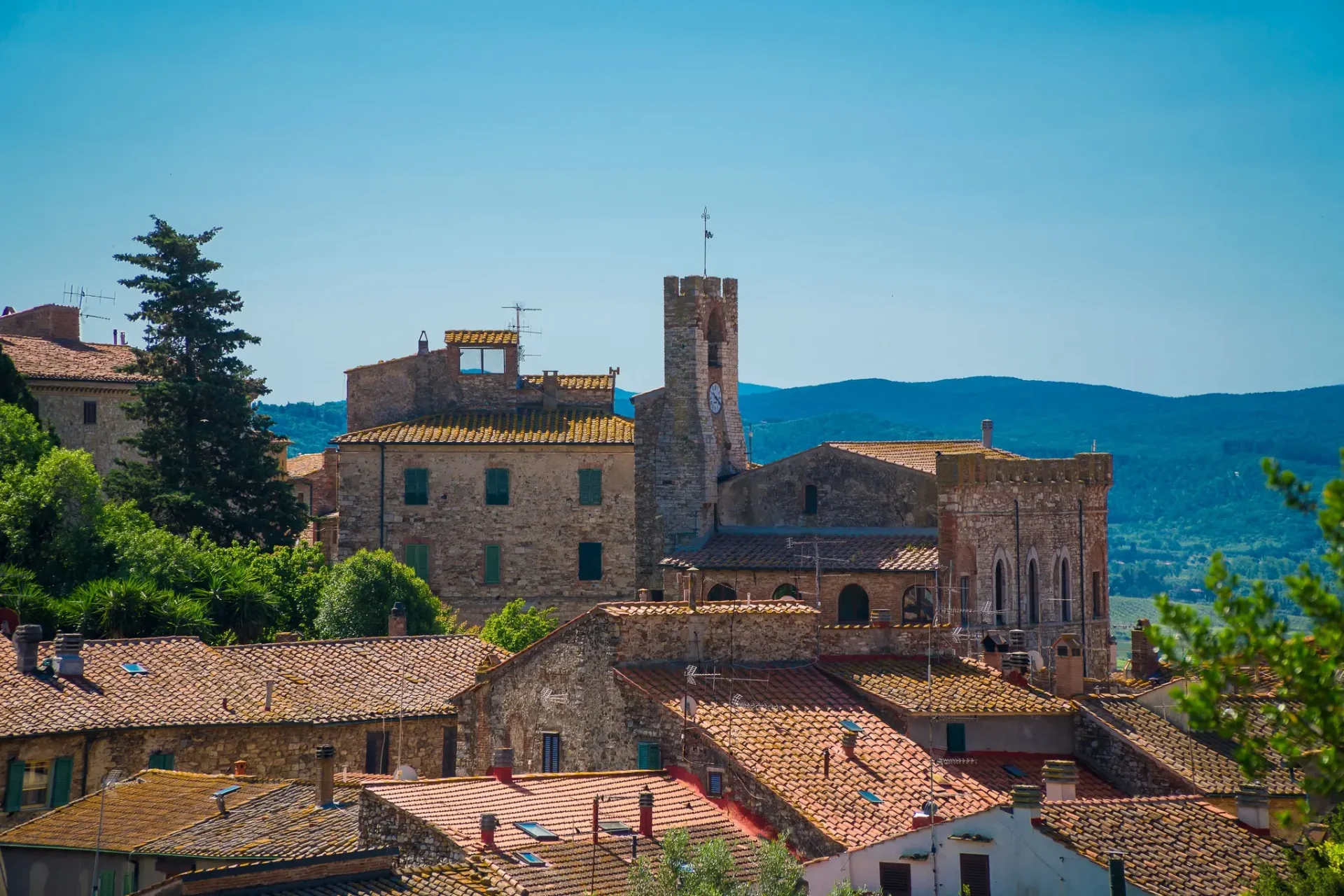
Suvereto is one of the most beautiful villages in Tuscany: a town enclosed by medieval walls, with stone lanes, arches, little squares and a fortress overlooking hills covered in vineyards and olive groves. It belongs to I Borghi più belli d’Italia (the most beautiful villages in Italy), holds the Touring Club’s Orange Flag, is a City of Wine, City of Olive Oil and Cittaslow, and is the heart of an area of award-winning red wines, the Suvereto DOCG.
Its name comes from the suveri, the cork oaks that once covered these hills. In 1201 the Aldobrandeschi family granted the town the Charta Libertatis, making it one of the first free communes in the Maremma.
Where is Suvereto
Suvereto is in the province of Livorno, inland in the Val di Cornia, about 90 metres above sea level and some ten kilometres from the sea. The municipality has about 2,900 inhabitants and includes the villages of Belvedere, Montioni, Prata and San Lorenzo. It is one of the closest villages to Campiglia Marittima and Venturina Terme.
Approximate driving time: about 15 minutes from Campiglia Marittima and Venturina Terme, 25 from Piombino and San Vincenzo.
Request a quoteWhat to see in Suvereto: the highlights
- The Rocca Aldobrandesca, at the top of the village, with its museum and views over the Val di Cornia.
- The medieval walls and the gates into the old town.
- The 13th-century Town Hall, with its loggia and stairway.
- The Cloister of San Francesco, founded in 1286, and the church of the Santissimo Crocifisso.
- The church of the Madonna di Sopra la Porta, from the 18th century.
- The Museum of Sacred Art and the Doll Museum, in the old town.
- The Pieve di San Giusto, a Romanesque gem just outside the walls.
- The wineries and olive groves in the hills around the village.
The old town can be explored on foot in a couple of hours; with the Pieve, a museum, a winery stop and lunch, allow half a day.
The Rocca Aldobrandesca and the walls
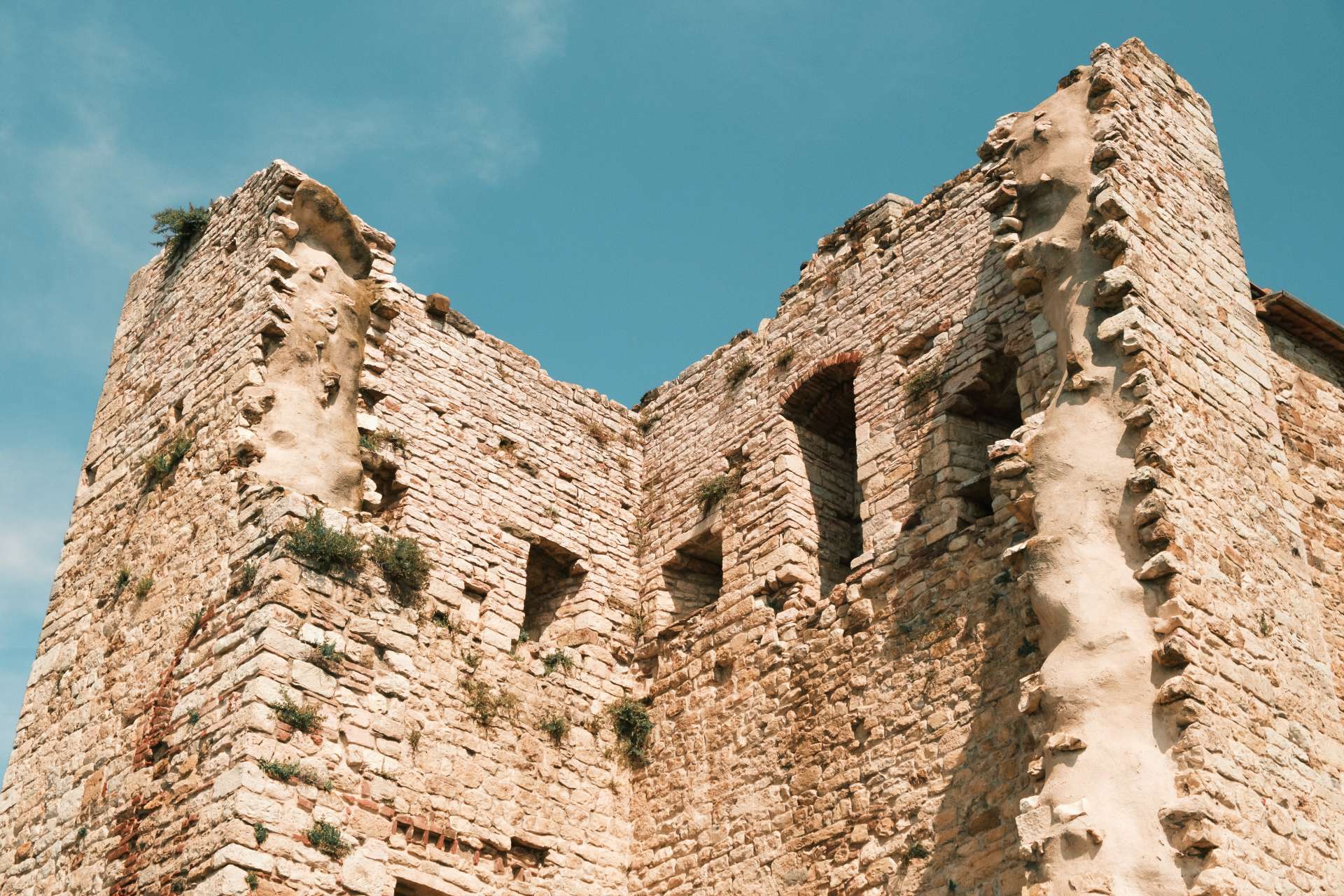
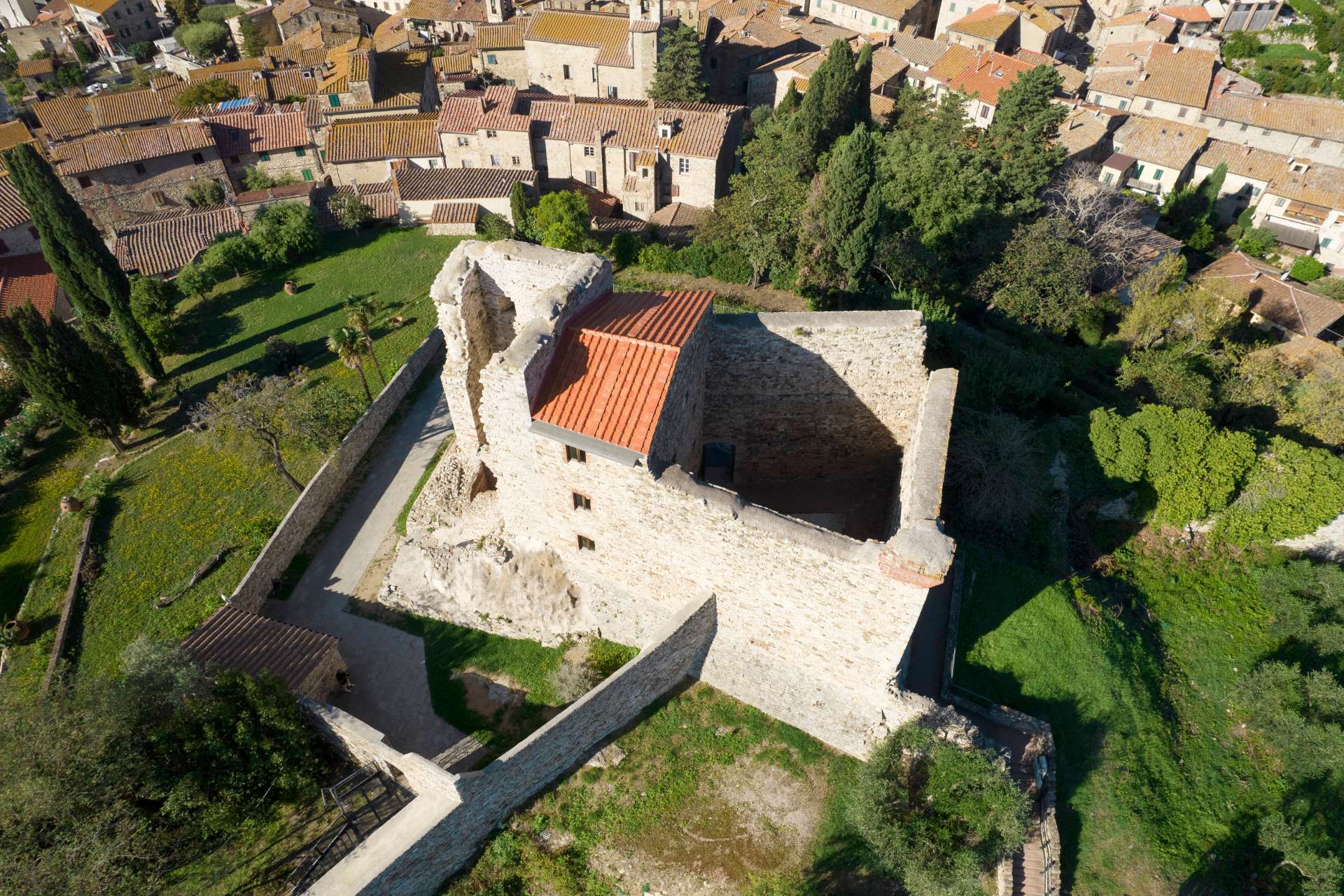
The Rocca Aldobrandesca is the symbol of Suvereto. Built by the Aldobrandeschi from the second half of the 12th century, it dominates the town from its highest point: climbing through the lanes you reach its walls, from which the view sweeps over the hills of the Val di Cornia and, on clear days, all the way to the sea.
Inside is the Rocca Museum, part of the Val di Cornia Parks network: its rooms tell the story of the village, from the passage of Emperor Henry VII in 1313 to the era of Elisa Bonaparte Baciocchi.
The village is still enclosed by its medieval walls, completed in the early 14th century. Walking around them and through the gates is the best way to understand how a medieval Maremma castle town was organised.
The Town Hall and the Cloister of San Francesco
The Town Hall
Built in the 13th century, the Palazzo Comunale is one of the finest examples of medieval civic architecture in the area. It is recognisable by its short, steep stairway covered by a loggia, and it is the heart of village life, with the square in front of it.
The Cloister of San Francesco and the Santissimo Crocifisso
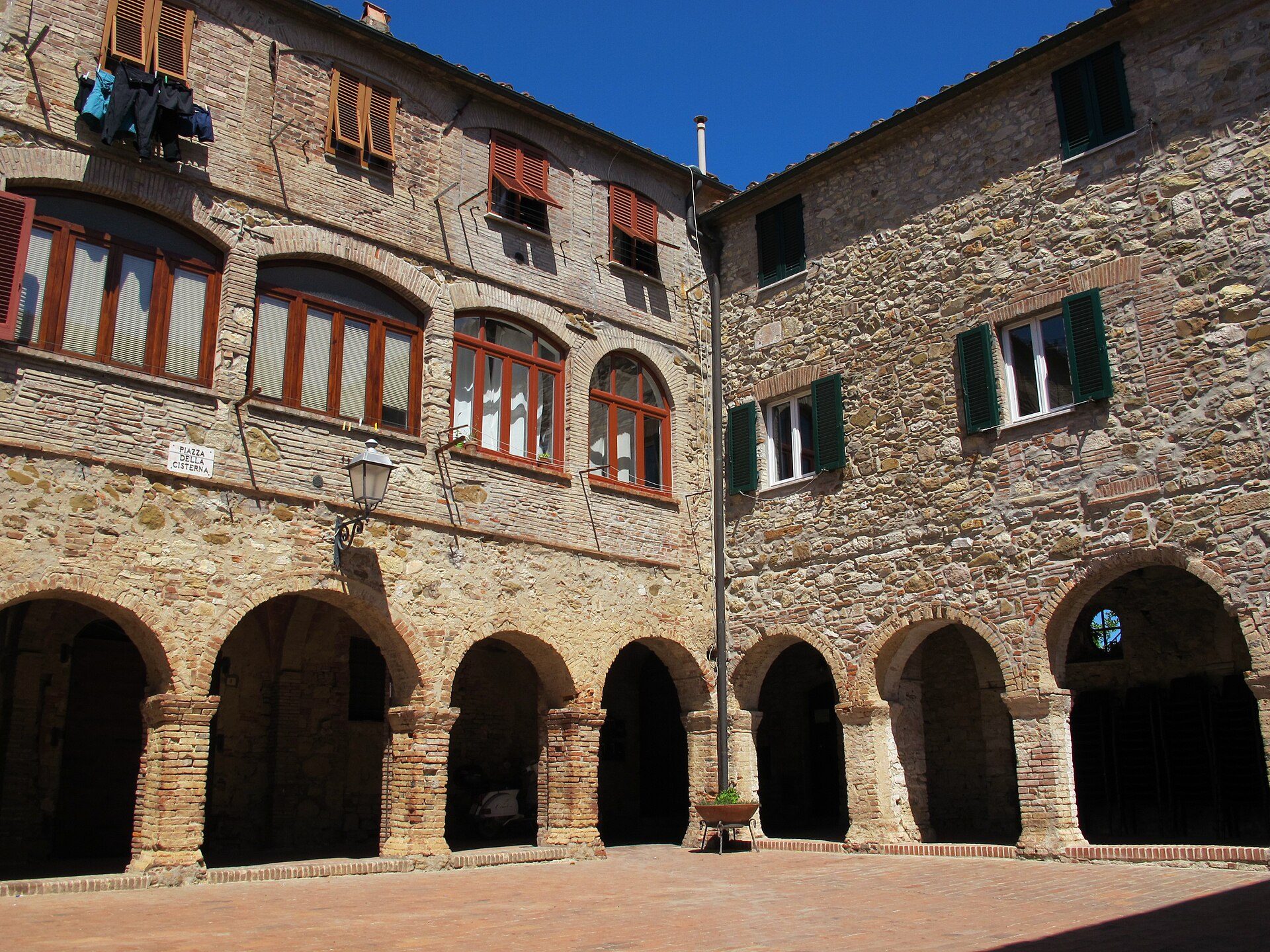
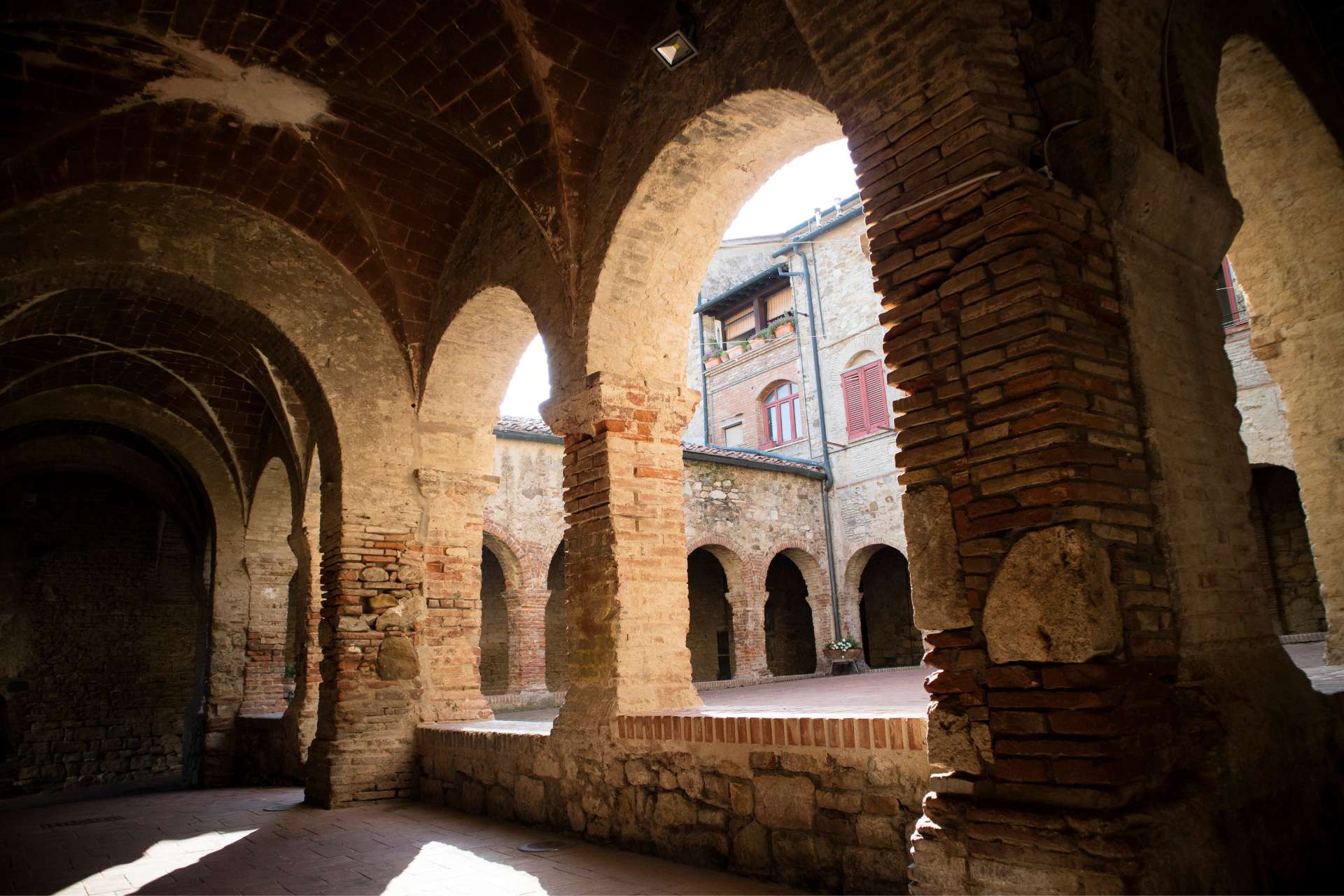
Founded in 1286, the San Francesco complex preserves its cloister with a portico of stone and brick arches, decorations and inscriptions that tell its history. Next to the former convent stands the 16th-century church of the Santissimo Crocifisso, which houses a 14th-century wooden crucifix much venerated by the locals.
Churches and museums in the old town
Madonna di Sopra la Porta
Along Via Matteotti is the church of the Madonna di Sopra la Porta, from the 18th century, built by the townspeople as a thanksgiving after a violent storm. Above the altar is an Immaculate Conception and, in the lunette over the portal, a Redeemer.
The “San Giusto” Museum of Sacred Art
In the former church of San Michele Arcangelo, in Piazza Vittorio Veneto, the Museum of Sacred Art displays paintings, two wooden statues attributed to Vecchietta and a 15th-century marble panel.
The Doll Museum
In Via Magenta, the Museo Artistico della Bambola shows the collection donated by Maria Micaelli: historic dolls and works by contemporary artists. A charming visit that children love too.
Museum opening hours change with the seasons: check them before your visit.
The Pieve di San Giusto
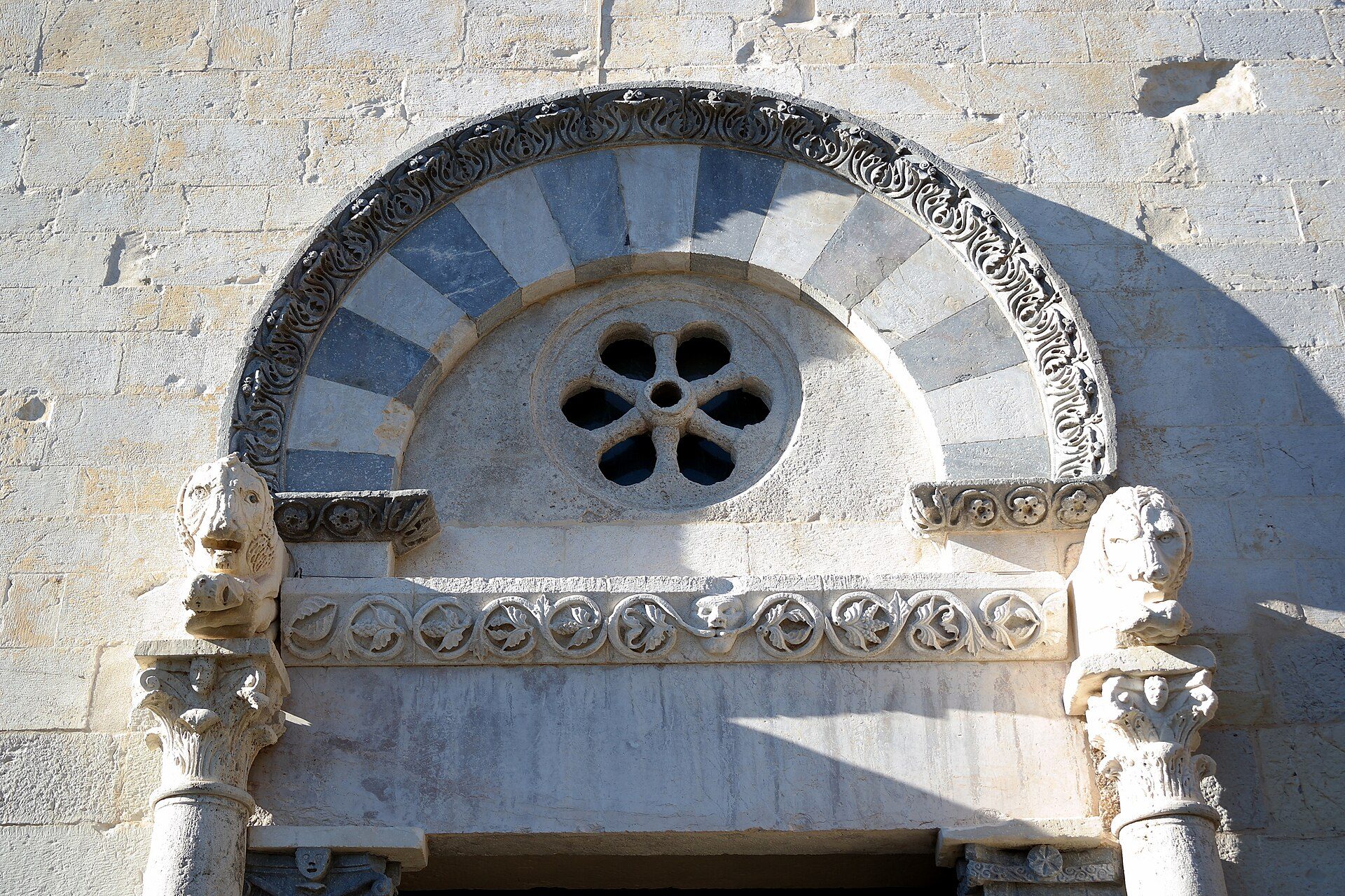
Just outside the walls, in the middle of the countryside, stands the Pieve di San Giusto, one of the most important examples of Romanesque architecture in the Val di Cornia. Recorded as early as the 10th century and rebuilt at the end of the 12th, it has a Latin-cross plan with a single nave and apse; inside is an octagonal baptismal font carved from a single block of stone.
It is worth a stop just for its portal, with a two-tone arch, a carved rose window and animal figures on either side. Here, in 1313, the body of Emperor Henry VII of Luxembourg lay in state while his army carried it back to Pisa: an event the village still remembers with the Emperor’s Palio.
A short history of Suvereto
- 973: the name Suvereto first appears in a document of the Aldobrandeschi.
- 12th century: the Aldobrandeschi build the fortress; in 1201 they grant the Charta Libertatis and Suvereto becomes a free commune.
- 13th–14th centuries: the village comes under the influence of Pisa.
- 1399: with the rise of the Appiani lordship, Suvereto follows the fortunes of the State of Piombino.
- 1805: Napoleon gives the Principality of Piombino to his sister Elisa Bonaparte and Felice Baciocchi, who revive the Montioni mines and the vineyards.
- 1815: Suvereto becomes part of the Grand Duchy of Tuscany.
Suvereto and its wine
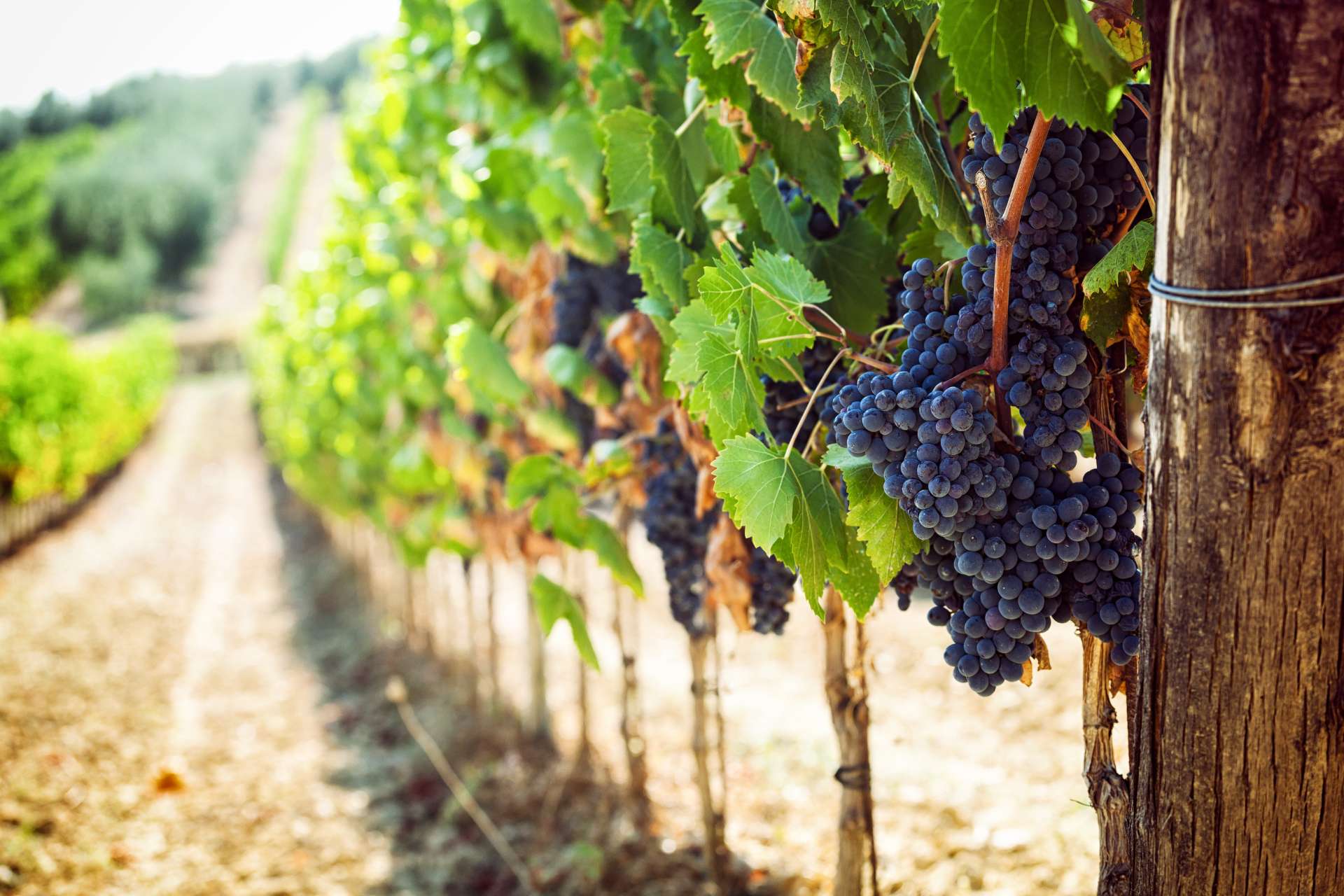
The hills around the village are among the best in Tuscany for red wine. The Suvereto DOCG, recognised in 2011, includes wines from Sangiovese, Merlot and Cabernet Sauvignon, and the latest rules have added Syrah and Cabernet Franc. Prata is home to the Lazzero di Prata olive, the symbol of Suvereto’s olive oil.
Many estates open their cellars for tours and tastings. Among those on the portal:
- Tua Rita and Rigoli, on the edge of the village;
- Tenuta Casadei and Petra, the winery designed by Mario Botta;
- Petricci e del Pianta in San Lorenzo;
- for olive oil, Azienda Agricola Pietrasca.
Events in Suvereto
- Palio delle Botti: teams roll 500-kilo barrels through the streets of the old town. It is run in May, for the feast of Santa Croce, and on 13 August with the Emperor’s Palio, which since 1994 has commemorated Henry VII’s passage.
- Wild Boar Festival (Sagra del Cinghiale): between late November and early December, a historic festival with more than fifty editions behind it, wild boar dishes and a market in the old town.
- Calici di Stelle: in August, an evening devoted to wine in the village squares.
- Suber – Suvereto Wine Festival: the festival of wine and local produce.
- Summer: concerts, markets and evenings in the old town.
The up-to-date calendar is on the Suvereto events page.
When to visit Suvereto
Suvereto is lovely in every season. Spring and autumn are ideal for walking and visiting wineries, with the grape harvest in September and new olive oil between October and November. In summer the village is lively in the evening, and easy to combine with the beach.
How to get there and where to park
By car: from the SS1 Aurelia take the Venturina exit and follow the provincial road to Suvereto, about ten minutes. By train: the nearest station is Campiglia Marittima, in Venturina Terme, on the Tirrenica line; from there continue by bus or taxi.
The old town is explored on foot. Car parks are just outside the walls, a few minutes’ walk from the main square; guests of accommodation in the centre can get a temporary permit to load and unload luggage.
A perfect stop on your holiday
Suvereto is a quarter of an hour from Campiglia Marittima: you can visit in the morning and spend the afternoon at the beach, at Rimigliano or the Sterpaia Park, or at the thermal baths of Venturina.
Roads also lead from the village to the woods of Montioni Park, to Sassetta and to Monterotondo Marittimo, with the steaming Biancane. For a tour of villages, Suvereto pairs well with Castagneto Carducci and Bolgheri.
Plan your stay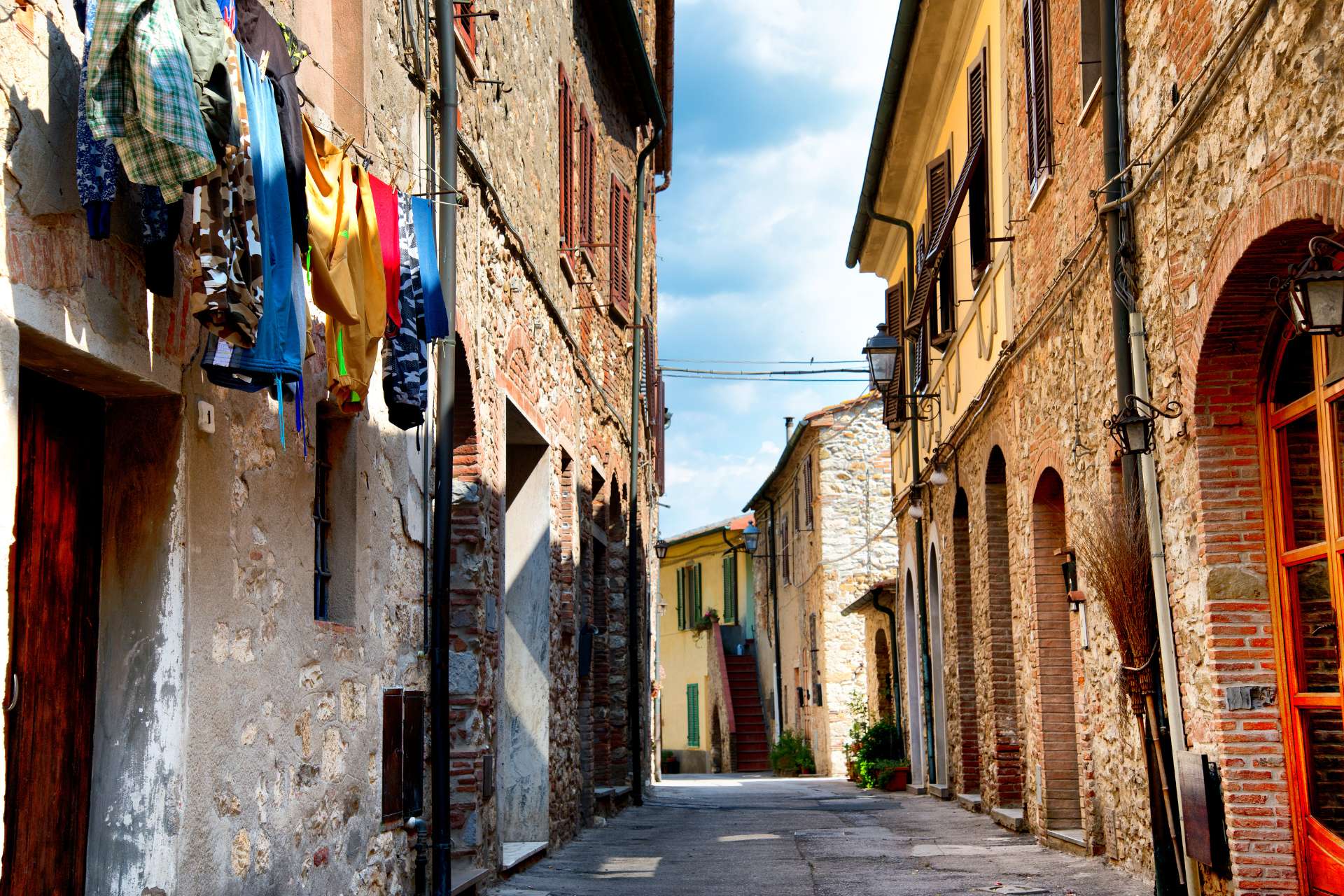
Discover Suvereto with Ama Campiglia Marittima
Through the Ama Campiglia Marittima portal you can find where to stay, the restaurants and the experiences linked to wine, nature and culture in the Val di Cornia, for a holiday a few minutes from Suvereto.
Get a quoteFrequently asked questions about Suvereto
Where is Suvereto?
In Tuscany, in the province of Livorno, inland in the Val di Cornia, about ten kilometres from the sea and a quarter of an hour from Campiglia Marittima and Venturina Terme.
What is there to see in Suvereto?
The Rocca Aldobrandesca and its museum, the medieval walls, the Town Hall with its loggia, the Cloister of San Francesco, the churches of the Santissimo Crocifisso and the Madonna di Sopra la Porta, the Museum of Sacred Art and, just outside the village, the Romanesque Pieve di San Giusto.
Is Suvereto one of the most beautiful villages in Italy?
Yes, Suvereto is part of I Borghi più belli d’Italia and also holds the Orange Flag of the Touring Club Italiano.
Which museums are there in Suvereto?
The Rocca Aldobrandesca Museum, the “San Giusto” Museum of Sacred Art in the former church of San Michele and the Doll Museum.
How long does it take to visit Suvereto?
A couple of hours for the old town; half a day if you add the Pieve di San Giusto, a museum, a winery and lunch.
Where can you park in Suvereto?
In the car parks just outside the walls, a few minutes’ walk from the centre, which is visited on foot only.
How do you get to Suvereto by train?
Take the Tirrenica line to Campiglia Marittima station, in Venturina Terme; from there continue by bus or taxi, about ten minutes.
Why is it called Suvereto?
From the “suveri”, the cork oaks that once covered the hills around the village.
Which wines are made in Suvereto?
Mainly reds of the Suvereto DOCG, recognised in 2011, from Sangiovese, Merlot, Cabernet Sauvignon and, more recently, Syrah and Cabernet Franc.
What is the Palio delle Botti?
A race in which teams roll 500-kilo barrels through the village streets: it is run in May for Santa Croce and on 13 August with the Emperor’s Palio.
When is the Wild Boar Festival?
Between late November and early December, with local dishes and a market in the old town.
Is Suvereto close to the sea?
Yes, the sea is about ten kilometres away: in 20 minutes you reach the beaches on the coast between Piombino and San Vincenzo.
Photo credits (via Wikimedia Commons): Luca Aless: Romanesque portal of the Pieve di San Giusto in Suvereto (CC BY-SA 4.0); Sailko: Cloister of San Francesco in the old town of Suvereto (CC BY-SA 3.0).