

Rocca di Campiglia Marittima: history, museum and visit
The medieval castle overlooking the village and the Val di Cornia
The Rocca di Campiglia Marittima (Campiglia’s medieval fortress) crowns the hilltop above the village and is one of the most important places for understanding its medieval history. Among walls, towers, archaeological remains and glimpses of the Val di Cornia, a visit takes you back to Campiglia’s origins and offers a superb vantage point over the surrounding countryside.
The complex includes the cassero (keep), the ancient cistern, the crenellated wall and the Museo della Rocca. Set in the highest part of the historic centre of Campiglia Marittima, it is reached on a pleasant walk through alleyways, little squares and stone buildings.
Where is the Rocca di Campiglia Marittima?
The Rocca stands on the highest hill of Campiglia Marittima, about 281 metres above sea level. It occupies a semicircular area at the top of the village, from which the view opens out over the metal-bearing hills, the plain and, on the clearest days, towards the coast.
To get there you walk up through the historic centre. The route is uphill, but it gradually reveals some of the most characteristic corners of the village. Along the way you pass historic buildings, arches, paved passageways and panoramic viewpoints that make the climb part of the visit itself.
Request a quote
The history of the Rocca di Campiglia
The history of the Rocca is closely bound up with the birth and growth of the village. Campiglia is already recorded as a castle in a document dating from 1004, while the structures you see today are the result of several building phases, mostly between the 11th and 15th centuries.
Before the stone buildings went up, the hilltop was home to a settlement of huts. As the Della Gherardesca family consolidated its power, Campiglia gradually took on the appearance of a fortified centre. During the 12th century important masonry structures were built, including the lord’s residence and the tower-like building that now houses the museum.
In the 13th century the complex was enlarged with new defences, a tower and a large cistern. The Rocca was not only a military stronghold: it was also the centre of the political and seigneurial power exercised over the village and the surrounding territory.
From the late 13th century onwards the complex housed Pisan garrisons and, after Campiglia passed under Florentine rule, Florentine soldiers. The changes it underwent over time have left traces that still allow us to read the different phases of local history.
What to see at the Rocca di Campiglia Marittima
The visit takes in both the open-air spaces of the archaeological complex and the rooms of the museum. Even just looking at the surviving structures, you can appreciate the strategic role the Rocca played during the Middle Ages.
The cassero or keep
The cassero, also known as the dongione (keep), is one of the best-preserved buildings in the complex. It was originally both a residence and a defensive structure, and one of the most prestigious symbols of the lords’ power.
Today it houses the Museo della Rocca, where finds and reconstructions guide visitors through daily life in the medieval village.
The crenellated wall and the lord’s residence
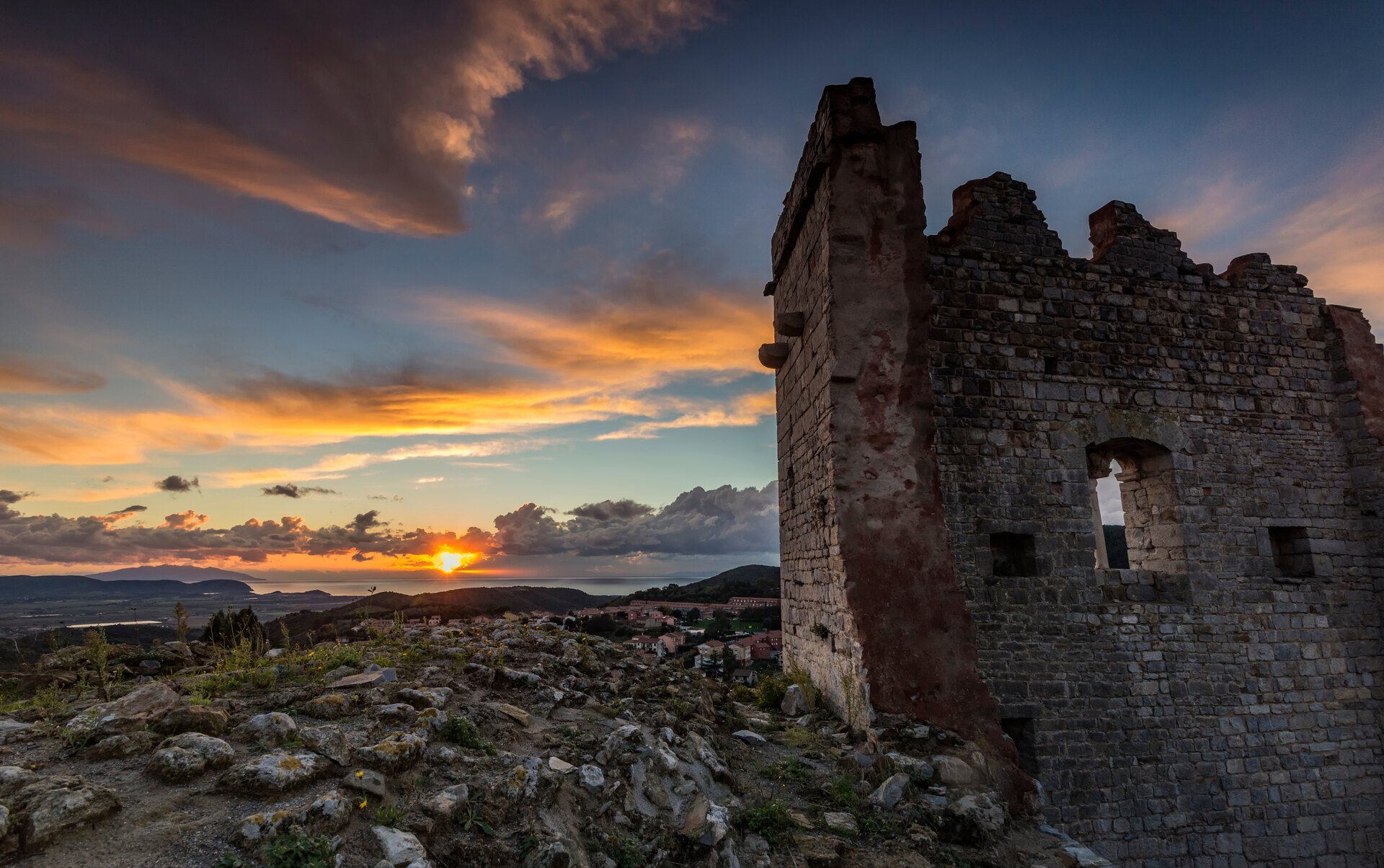
One of the most recognisable features is the imposing crenellated wall with a mullioned window, which belonged to the old lord’s residence. It is one of the Rocca’s most interesting architectural survivals and helps you picture what the complex looked like in medieval times.
Its size and position make it clear that the Rocca was also designed to display the authority of the family that controlled Campiglia and the surrounding territory.
The tower and the ancient cistern
The tower was part of the fortress’s defence and surveillance system. From the top of the hill it was possible to keep watch over the roads, the countryside and the mining areas that for centuries played a key role in the local economy.
Inside the complex there is also an ancient cistern, used to collect and store water. It reveals an essential aspect of daily life in a fortified stronghold perched on a hilltop.
The view over the Val di Cornia
One of the main reasons to climb up to the Rocca is the view over the Val di Cornia. From the upper part of the complex you can look out over the village and a landscape where hills, plain and coast meet.
The view instantly explains Campiglia Marittima’s strategic position. The village lies between the sea of the Etruscan Coast, the metal-bearing hills and well-known towns such as San Vincenzo, Piombino and Suvereto.

The Museo della Rocca di Campiglia
The Museo della Rocca (Rocca Museum) is housed in the cassero and sets out to reconstruct the history of the complex and its medieval community. The displays use information panels, reconstructions and finds unearthed during the archaeological excavations carried out on the site.
The objects on show bring you close to the most tangible aspects of daily life: how people lived, the activities carried out inside the fortress and the roles of those who lived there.
Among the most significant finds are an almost complete piece of body armour, a helmet and a small collection of weapons. The exhibition thus links the archaeological structures visible outdoors to the political and military events that shaped Campiglia in the Middle Ages.
The archaeological excavations and restoration of the Rocca
Much of what we know about the complex today comes from archaeological investigations carried out at the end of the 20th century. The excavations identified the different phases of the settlement and traced the transition from the first village to the later fortified buildings.
The restoration of the site has reopened to visitors one of the key places in the history of Campiglia Marittima. Today the ruins are not just a viewpoint, but form a genuine archaeological trail telling the story of how the village evolved.
How to get to the Rocca di Campiglia
The Rocca lies within the historic centre and the last stretch has to be covered on foot, uphill. Once you reach Campiglia Marittima, it is best to leave your car in the parking areas around the village and continue on foot, following the signs for the centre and the Rocca.
The route follows paved streets and includes some steep sections, so comfortable shoes are recommended, especially if you want to combine the visit with a full walk around the village.
Coming from Venturina Terme, you can reach Campiglia Marittima in a few minutes and include the Rocca in a half-day itinerary of the historic centre.
Parking and accessibility
The parking areas are mostly outside or on the edge of the historic core. The distance to the Rocca depends on where you park, but you should always expect a walk and a climb.
The medieval layout of the village, the slopes and some uneven surfaces can make the route challenging for people with reduced mobility. Before visiting the museum, it is advisable to check access conditions directly with the operator, along with the availability of any dedicated services.
How long does the visit take?
To explore the archaeological complex, take in the view and visit the museum, allow at least an hour. Including a stroll through the historic centre, the visit can easily fill half a day.
You can extend the route to Palazzo Pretorio (the old magistrates’ palace), the Pieve di San Giovanni (the Parish Church of St John) and the village’s other monuments.
When to visit the Rocca
The Rocca di Campiglia can be included in a walk around the village all year round. Spring and autumn are the most pleasant seasons for tackling the climb and exploring the outdoor areas at a relaxed pace.
In summer it is best to go in the morning or late afternoon, avoiding the hottest hours. Clear days are particularly good for enjoying the view over the Val di Cornia and the coast.
Museum opening hours and arrangements may vary, so before setting off it is a good idea to check the latest information on the official website of the Parchi della Val di Cornia.
A walk through the historic centre of Campiglia Marittima
A visit to the Rocca can be the starting point for a route through Campiglia Marittima’s historic heritage.
- Rocca di Campiglia: archaeological complex, museum and views over the Val di Cornia.
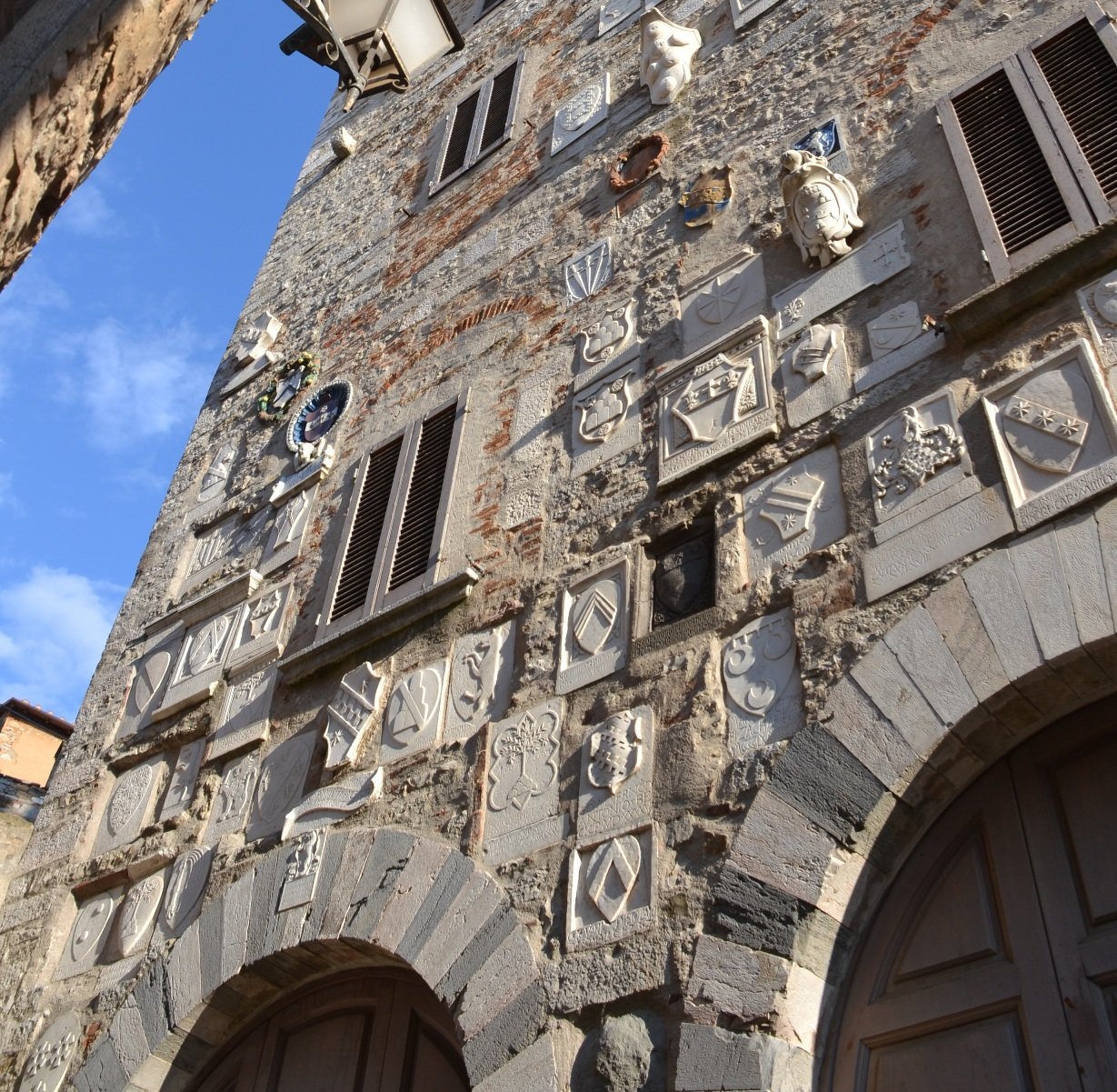
- Palazzo Pretorio: the old seat of civic power, recognisable by the podestà coats of arms on its façade.
- Teatro dei Concordi: a small 19th-century theatre in the heart of the village.
- Museo d’Arte Sacra: a collection devoted to the local religious and artistic heritage.
- Pieve di San Giovanni: a Romanesque church just outside the historic core.
Between stops, take your time wandering the alleyways, pausing in the little squares and enjoying the views of the countryside through the openings in the walls.
What to see nearby
Campiglia Marittima’s location makes it easy to continue on to other highlights of the Val di Cornia.
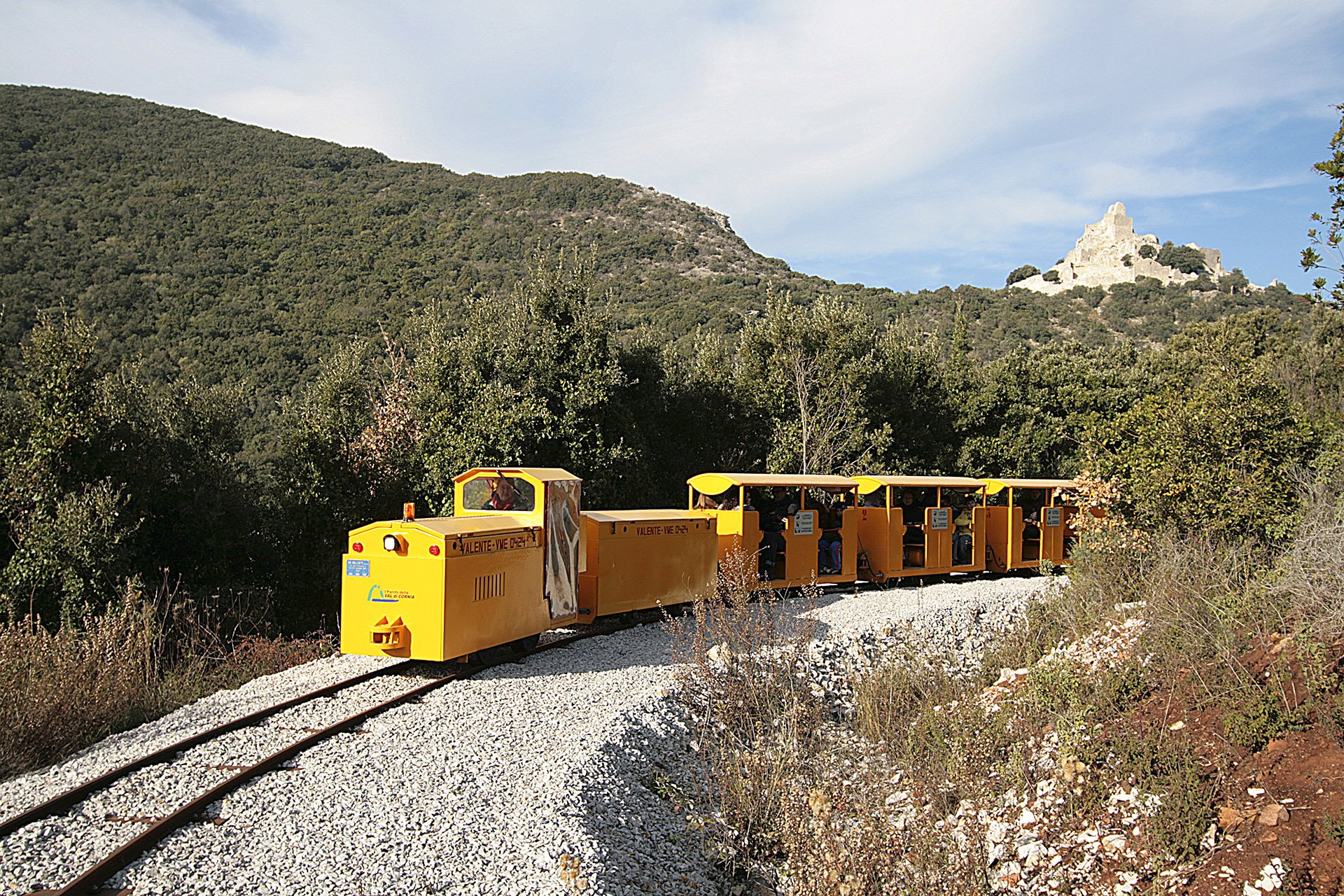
- San Silvestro Archaeological Mining Park, devoted to the area’s mining history.
- Venturina Terme, known for its thermal waters and wellness experiences.
- Rimigliano Coastal Park, with its beach, dunes and Mediterranean scrub.
- Gulf of Baratti, where sea, pine woods and archaeology come together.
- Populonia, a panoramic village steeped in the Etruscan history of the coast.
- Suvereto, one of the Borghi più belli d’Italia (Most Beautiful Villages in Italy), a quarter of an hour’s drive away.
- Sterpaia Park, with 8 km of Blue Flag beach on the Gulf of Follonica.
Practical tips for your visit
- Wear comfortable shoes suitable for paved streets.
- Bring water on hot days.
- Allow enough time to tackle the climb without rushing.
- Check the museum opening hours before you set off.
- In summer, visit the Rocca in the morning or late afternoon.
- Combine your visit with a full walk around the historic centre.
- Respect the archaeological structures and follow the signs along the route.
Why visit the Rocca di Campiglia Marittima
Visiting the Rocca means stepping into the place from which a key part of Campiglia Marittima’s history unfolded. The surviving buildings, the archaeological finds and the landscape tell the story of the relationship between the village, its noble families, its trade routes and the mineral resources of the Val di Cornia.
It is a great stop for history and archaeology enthusiasts, but also for anyone who wants to get to know the village on a scenic walk. From the hilltop you can see why Campiglia Marittima makes such a strategic base for alternating between villages, parks, thermal spas and days on the Etruscan Coast.
To plan your stay, browse our suggestions for where to stay, restaurants and experiences in Campiglia Marittima.
Frequently asked questions about the Rocca di Campiglia
Where is the Rocca di Campiglia Marittima?
The Rocca stands in the highest part of the historic centre of Campiglia Marittima, on a hill overlooking the Val di Cornia.
How do you get to the Rocca?
The final stretch is on foot through the historic centre. It is best to leave your car in the parking areas around the village and follow the signs for the Rocca.
What can you see in the complex?
The complex includes the cassero (keep), the ancient cistern, the tower, the remains of the lord’s residence and the Museo della Rocca, which holds finds unearthed during the archaeological excavations.
How much time do you need for the visit?
Allow at least an hour to see the archaeological area and the museum. To include the rest of the historic centre, it is best to set aside at least half a day for the village.
Is the visit suitable for children?
Yes, especially for children who love castles, towers and medieval history. Do take care with the slopes, uneven paving and archaeological structures.
Is the Museo della Rocca always open?
Opening days and hours may change during the year. Before your visit, check the information published on the official Val di Cornia Parks website.
What is the best time to visit the Rocca?
Spring and autumn are particularly pleasant. In summer, mornings or late afternoons are recommended, when temperatures are milder and the light shows off the view at its best.
Get a quote


