

Palazzo Pretorio in Campiglia Marittima: history, coats of arms and visit
In the heart of the historic centre of Campiglia Marittima stands Palazzo Pretorio (the old magistrates’ palace), one of the most significant buildings in the civic history of the village. For centuries it was where justice was administered and the main public decisions were taken; today it is an important cultural hub housing a museum, exhibition spaces, the historical archive and the tourist office.
Its central location and its façade adorned with the old coats of arms of the podestà (the town’s chief magistrates) make it one of the most interesting stops for anyone keen to discover the medieval past of the Val di Cornia.
Where is Palazzo Pretorio?
Palazzo Pretorio stands on Via Cavour, one of the main streets in the historic centre of Campiglia Marittima, in the province of Livorno.
Thanks to its location, it is easy to reach on foot after leaving your car in the car parks outside the medieval walls. A short stroll through alleyways, squares and stone arches brings you to the building, set in one of the most characteristic corners of the village.
A visit to the palazzo combines easily with the Rocca di Campiglia Marittima, the Pieve di San Giovanni and the village’s other historic monuments, all among the top things to see in Campiglia Marittima.
Request a quote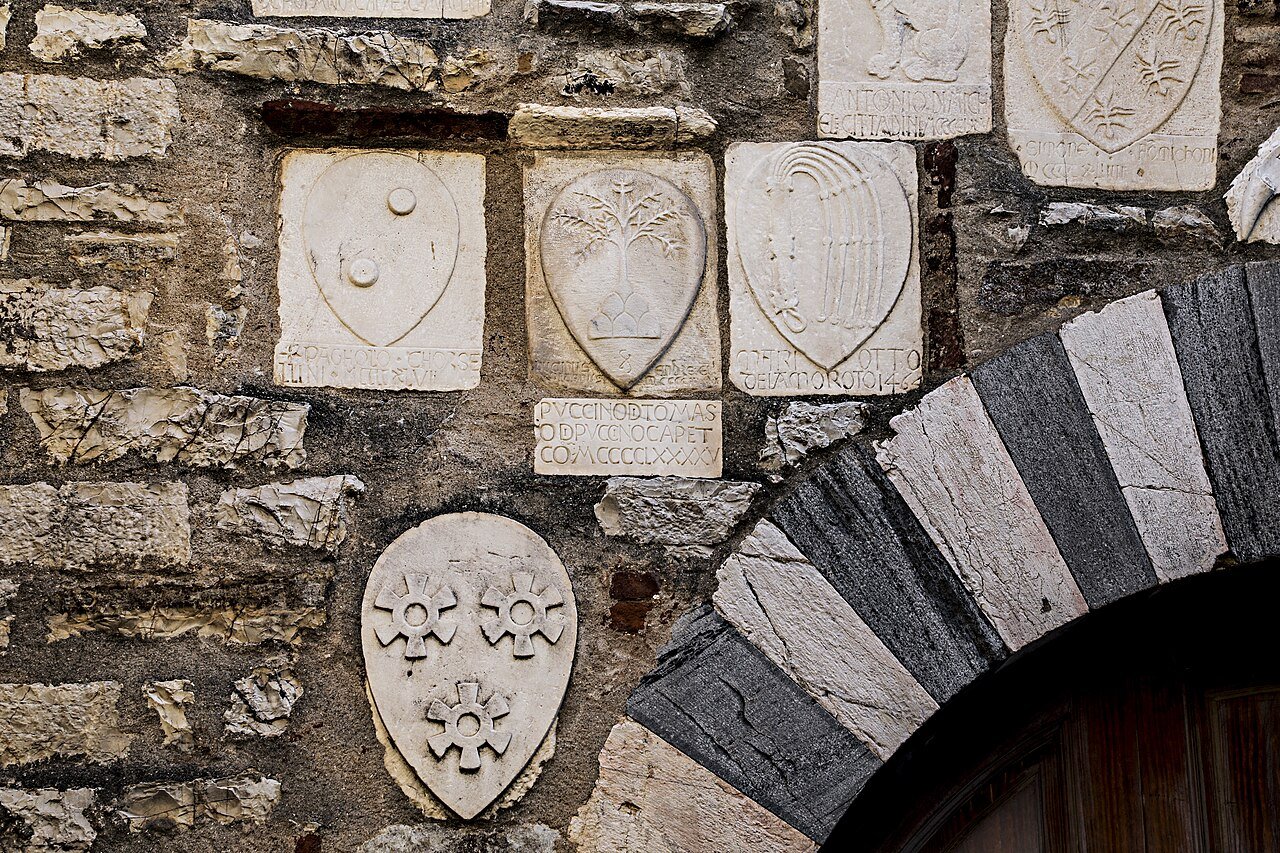
The history of Palazzo Pretorio
Palazzo Pretorio dates back to the 13th century, when Campiglia Marittima was consolidating its role as the administrative centre of the area.
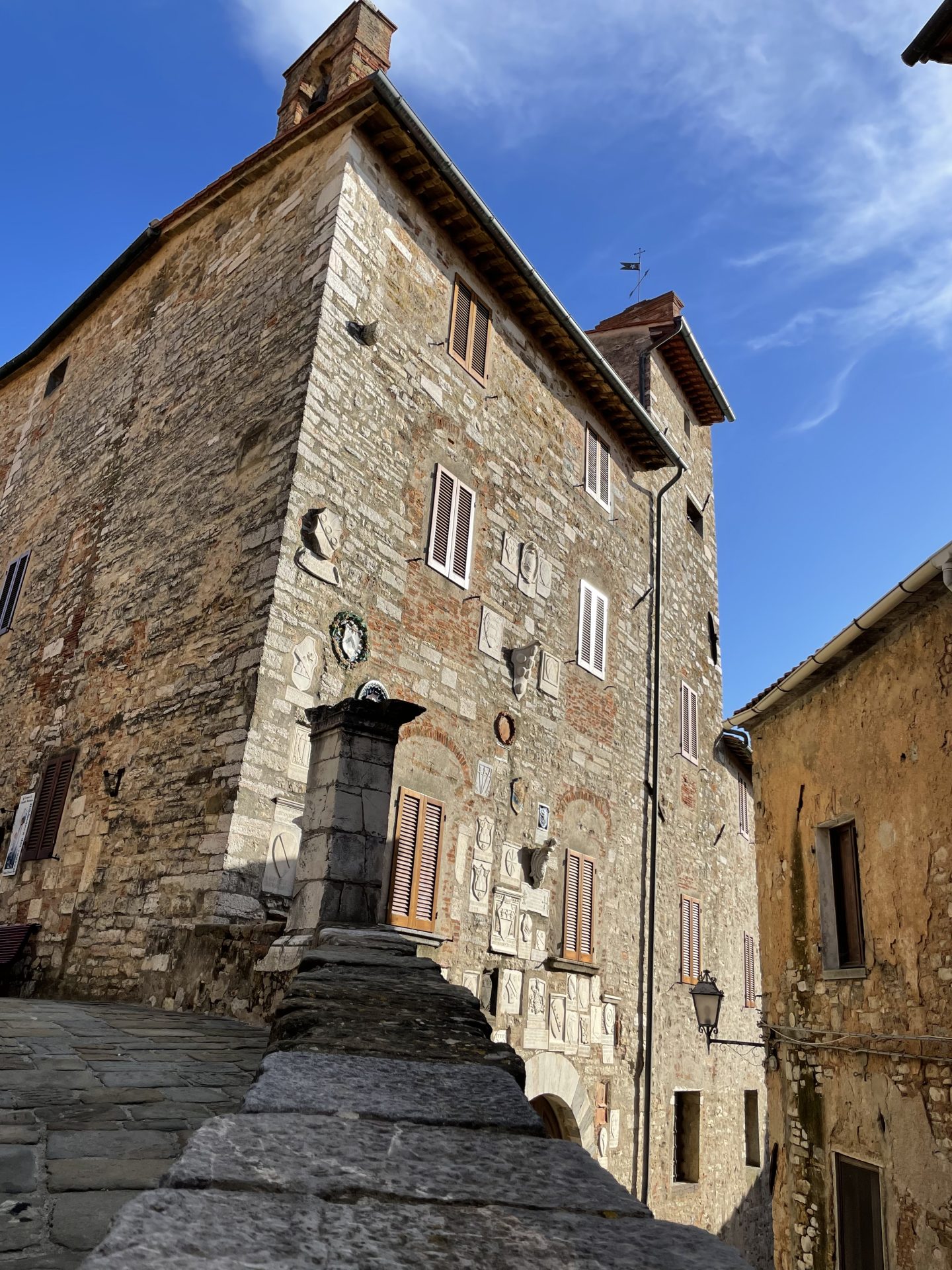
The building began life as the seat of the Capitano di Giustizia (Captain of Justice) and over the centuries housed the magistrates and podestà responsible for local government. Through successive political regimes the palazzo kept its institutional role, becoming the symbol of the community’s civic authority.
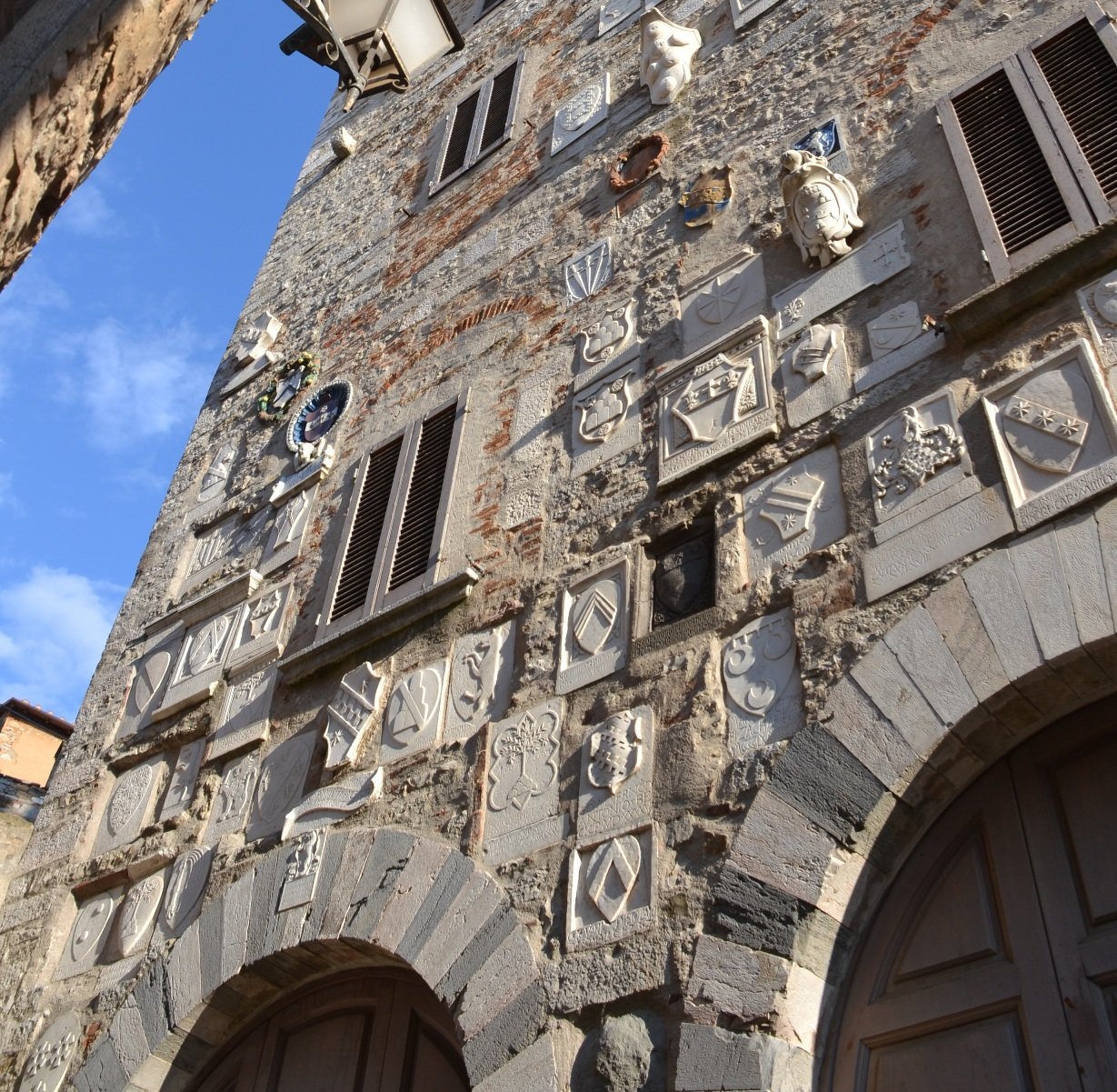
The façade still bears numerous coats of arms carved in stone, belonging to the podestà who governed Campiglia under Florentine rule. These heraldic emblems are among the building’s most distinctive features and a valuable record of the political history of medieval and Renaissance Tuscany.
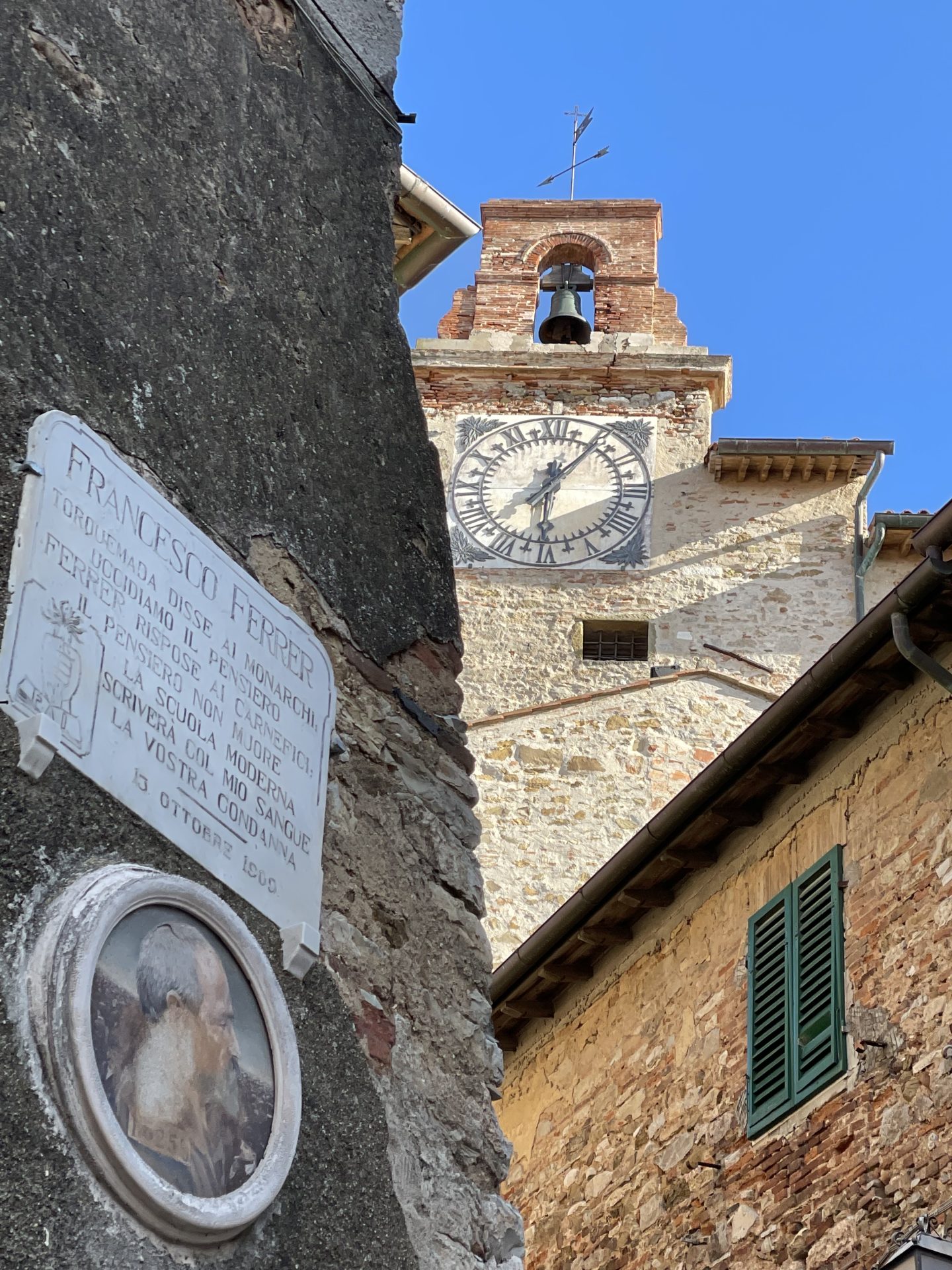
Completing the complex is the clock tower, visible from many points in the historic centre and now an integral part of the village skyline.
What to see on your visit
Even without going inside, Palazzo Pretorio has plenty of interesting details to admire.
- The podestà coats of arms in stone decorating the façade.
- The building’s medieval structure, altered over the centuries but still rich in historic features.
- The clock tower rising above the historic centre.
- The historic entrances and architectural details that reveal the palazzo’s former administrative role.
The atmosphere of the village adds to the experience: paved lanes, stone buildings and panoramic glimpses help you understand the urban setting in which Campiglia Marittima’s history unfolded.
What Palazzo Pretorio houses today
Over time Palazzo Pretorio has become an important cultural centre, devoted to culture and visitor services.
- Museo Carlo Guarnieri.
- Archivio Storico Comunale (Municipal Historical Archive).
- Biblioteca dei Ragazzi (Children’s Library).
- Exhibition rooms for temporary shows.
- Sala Valentino Polidori.
- Val di Cornia Tourist Information Office.
This new role has preserved the building’s historic value while keeping it a lively place, busy all year round.
Why visit Palazzo Pretorio
Palazzo Pretorio is much more than a historic building. A visit helps you understand the political and administrative evolution of Campiglia Marittima, see evidence spanning more than seven centuries of history and get to know one of the most iconic landmarks of the Val di Cornia.
The Museo Carlo Guarnieri and the cultural spaces also make the palazzo a worthwhile stop both for history lovers and for anyone wanting to explore the local artistic heritage.
Plan your stayUseful information for your visit
Access: Palazzo Pretorio is within the pedestrian zone of the historic centre and can only be reached on foot.
Parking: there are several parking areas outside the medieval walls, from which the historic centre is a few minutes’ walk.
Visit length: allow between 45 minutes and an hour to see the building and its main spaces. You may stay longer if there are temporary exhibitions or if you visit the museum.
Accessibility: some areas are accessible to people with reduced mobility. It is advisable to check for any updates before your visit.
When to visit
Palazzo Pretorio can be visited all year round together with the historic centre of Campiglia Marittima.
Spring and early autumn are generally the best times thanks to the pleasant temperatures, while in summer the village hosts numerous cultural events that make a visit even more appealing.
Did you know?
One of the most unusual features of Palazzo Pretorio is the heraldic coats of arms carved on its façade. Each one commemorates the term of a podestà who governed Campiglia Marittima, turning the palazzo into a true record of the area’s political history.
The building still serves a public and cultural role today, showing how an ancient medieval palace can remain a focal point of community life.
Suggested itinerary
A visit to Palazzo Pretorio fits easily into a route taking in some of the village’s main sights:
- Rocca di Campiglia Marittima.
- Pieve di San Giovanni.
- Museo d’Arte Sacra.
- Teatro dei Concordi.
If you’d like to explore more of the Val di Cornia, nearby you’ll also find the San Silvestro Archaeological Mining Park, Venturina Terme and the Gulf of Baratti.
After your visit, round off the day with one of the experiences in Campiglia Marittima.
Palazzo Pretorio on your visit to Campiglia Marittima
Palazzo Pretorio is one of the most important landmarks of Campiglia Marittima’s civic history. Its architecture, the coats of arms on its façade and the cultural spaces inside tell the story of the village from the Middle Ages to the present day.
Including it in a walk around the historic centre gives you a better understanding of the identity of the Val di Cornia area and introduces you to one of its most representative buildings. After the historic centre, the day can continue to the sea at San Vincenzo and Rimigliano Beach, or to the village of Suvereto.
Get a quoteFrequently asked questions about Palazzo Pretorio
Can you visit Palazzo Pretorio?
Yes. The building houses cultural spaces and services open to the public. Access to some areas may depend on opening times and scheduled activities.
What does Palazzo Pretorio house today?
It houses the Museo Carlo Guarnieri, the Municipal Historical Archive, the Children’s Library, exhibition rooms, the Sala Valentino Polidori and the Tourist Information Office.
How much time do you need to visit?
For a full visit of the building and its main spaces, allow about an hour.
Where is Palazzo Pretorio?
It is on Via Cavour, in the historic centre of Campiglia Marittima, in the province of Livorno.
Can you get there by car?
The historic centre is largely pedestrianised. It is best to use the car parks outside the walls and continue on foot.
Why is Palazzo Pretorio important?
Because it is the village’s main historic building devoted to civic administration and preserves important evidence of Campiglia Marittima’s political and institutional history.
Photo credits (via Wikimedia Commons): Stefano Benucci: Palazzo Pretorio, detail (CC BY-SA 4.0), Palazzo Pretorio, detail of the coats of arms (CC BY-SA 4.0).


