

Bolgheri: what to see and do among the village, cypresses and wine
Home of the Viale dei Cipressi and some of Tuscany’s greatest wines
Bolgheri is one of the most famous names in Tuscany: a tiny walled village on a hilltop, reached along the Viale dei Cipressi (Cypress Avenue) made famous by Giosuè Carducci, and surrounded by some of the most prestigious vineyards in the world, those of Bolgheri DOC and Sassicaia.
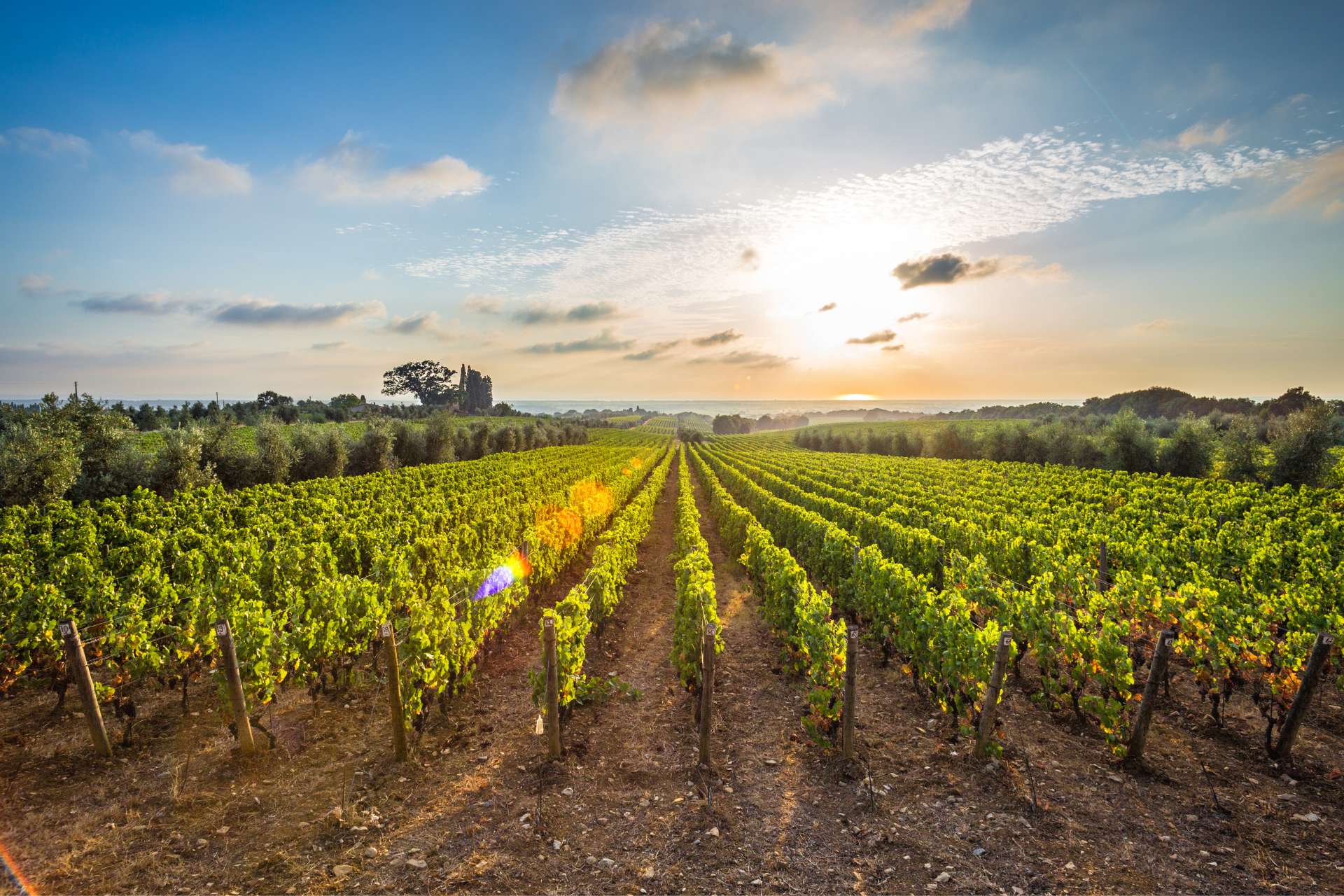
You can see it in a few hours, but it stays with you: the straight road lined with cypresses, the castle gate, the lanes full of wine bars and little shops, the rows of vines sloping down towards the sea.
Where is Bolgheri?
Bolgheri is not a municipality in its own right but a hamlet of Castagneto Carducci, in the province of Livorno, on the Etruscan Coast. The village sits at the foot of the hills, a few kilometres from the sea and the old Via Aurelia road.
Approximate driving time: about half an hour from Campiglia Marittima and Venturina Terme, 20 minutes from San Vincenzo.
Request a quoteWhat to see in Bolgheri: the main sights
- The Viale dei Cipressi, about 5 kilometres lined with more than two thousand cypress trees.
- The Oratorio di San Guido, the small octagonal chapel at the start of the avenue.
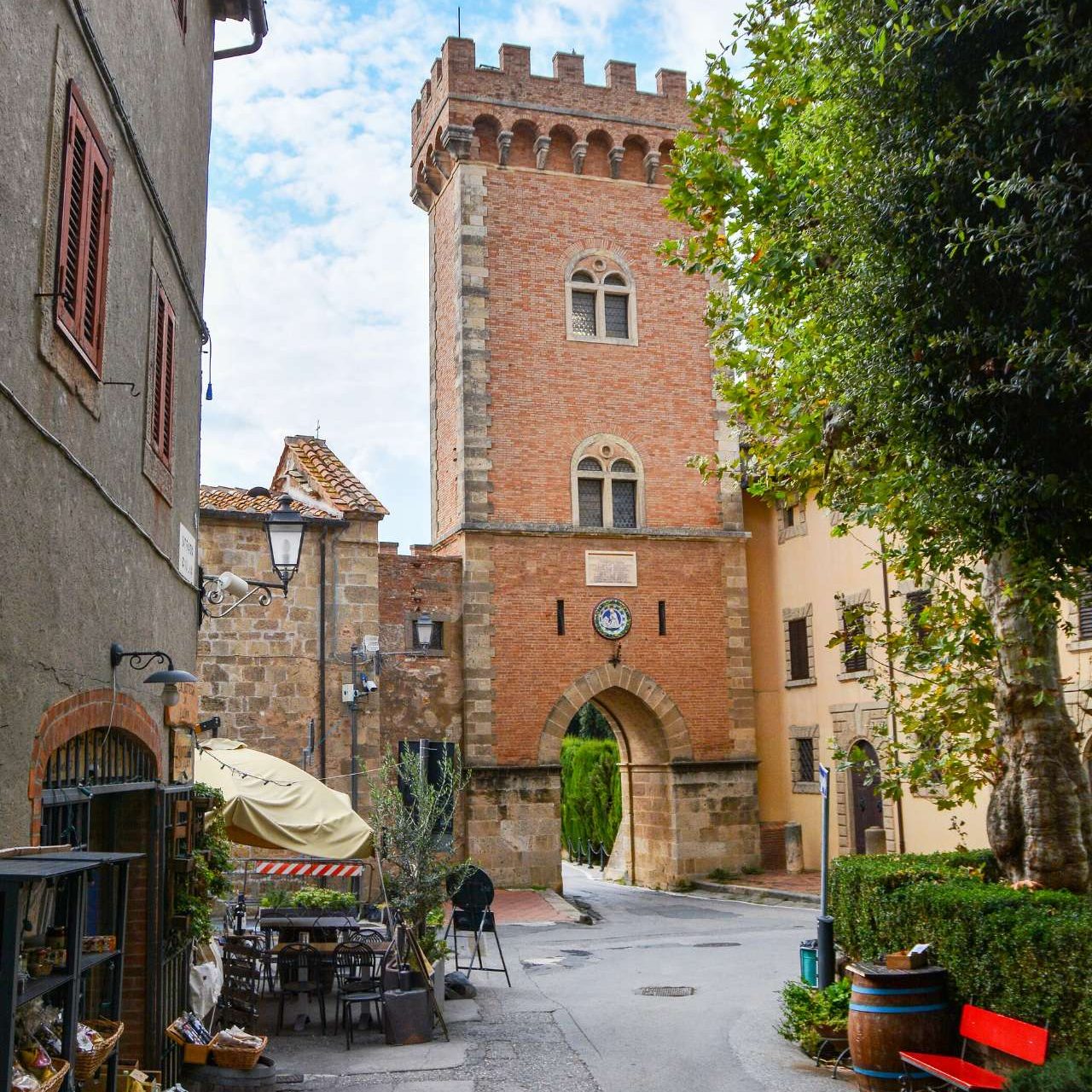
- The village and the Castello di Bolgheri, with its gateway and the lanes of the centre.
- The Bolgheri DOC wineries, for a tasting among the vines.
- Castagneto Carducci, the village where the poet spent part of his childhood, just a few minutes away.
Two or three hours are enough for the village and the avenue; add a winery and lunch and you will easily fill half a day.
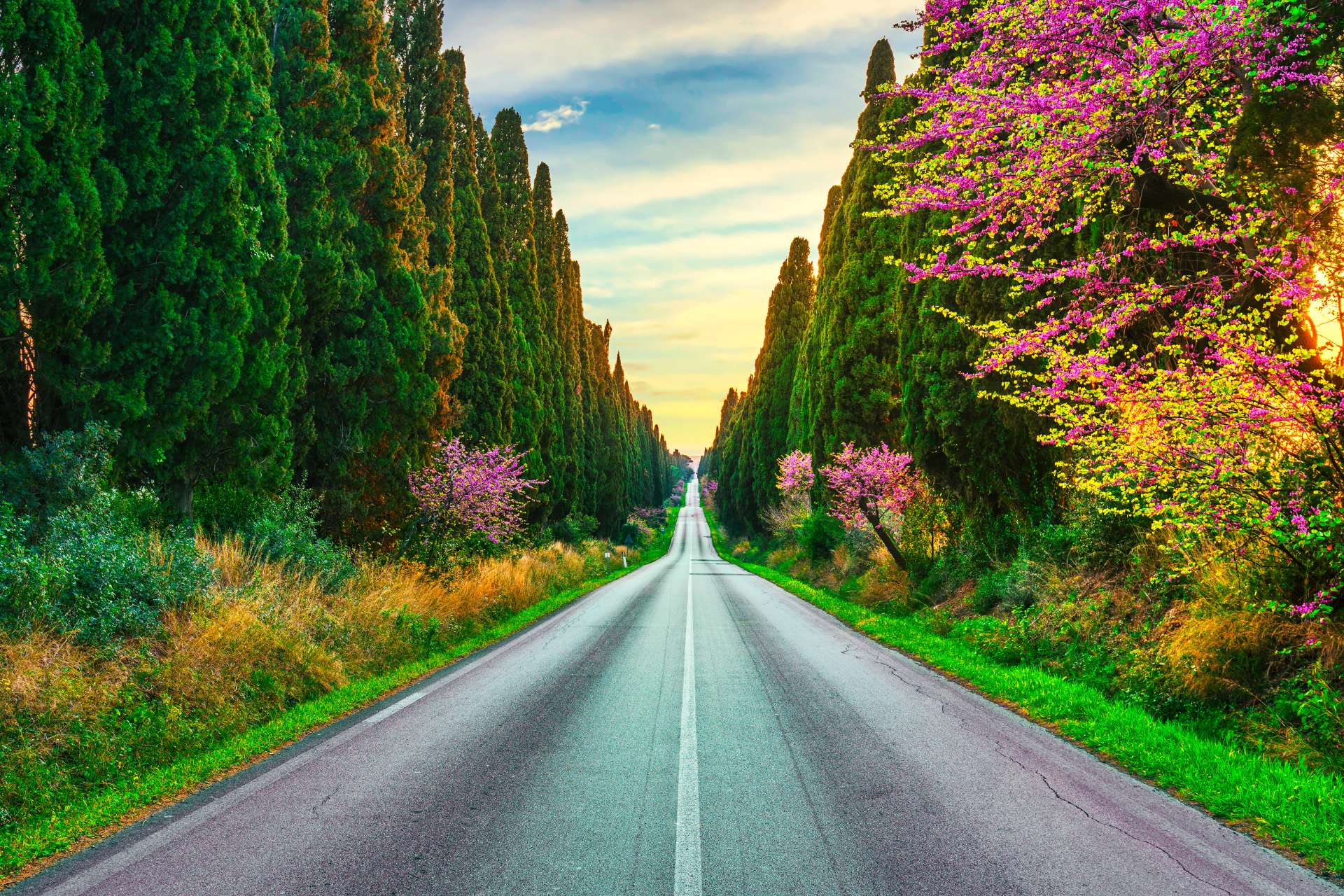
Bolgheri’s Viale dei Cipressi
The Viale dei Cipressi is a dead-straight road of about 5 kilometres that starts from the old Aurelia, by the Oratorio di San Guido, and climbs up to the village. It is lined with some 2,400 cypress trees planted in the 19th century, creating one of the most photographed scenes in Italy.
It was immortalised by Giosuè Carducci in his poem Davanti San Guido, in which the poet imagines talking with the “cipressi che a Bolgheri alti e schietti” [the cypresses, tall and straight at Bolgheri] that greet him as his train passes by.
Tip: the avenue is open to traffic. Only stop for photos where it is safe to pull over, or ride it by bike early in the morning or at sunset, when the light through the cypresses is at its most beautiful.
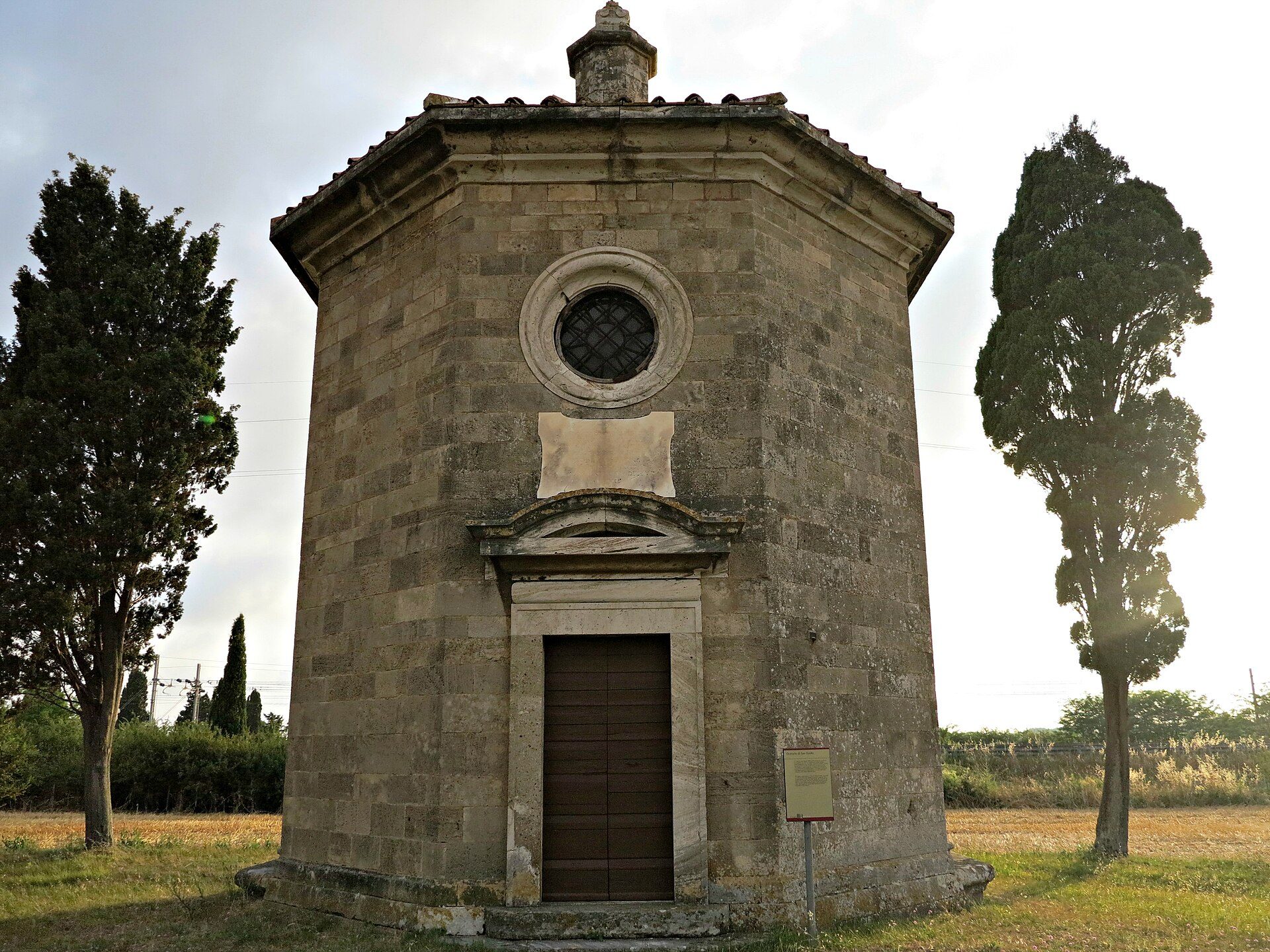
The Oratorio di San Guido
At the start of the avenue, on the old Aurelia, stands the little Oratorio di San Guido (Chapel of St Guido): an octagonal chapel built in 1703 by the Della Gherardesca family in memory of the hermit Guido. It is the “San Guido” in the title of Carducci’s poem, and the ideal starting point for exploring the avenue.
Not far away is the Tenuta San Guido estate, where from the 1940s Marchese Mario Incisa della Rocchetta planted the first Sassicaia vines, launching Bolgheri’s fame as a wine region.
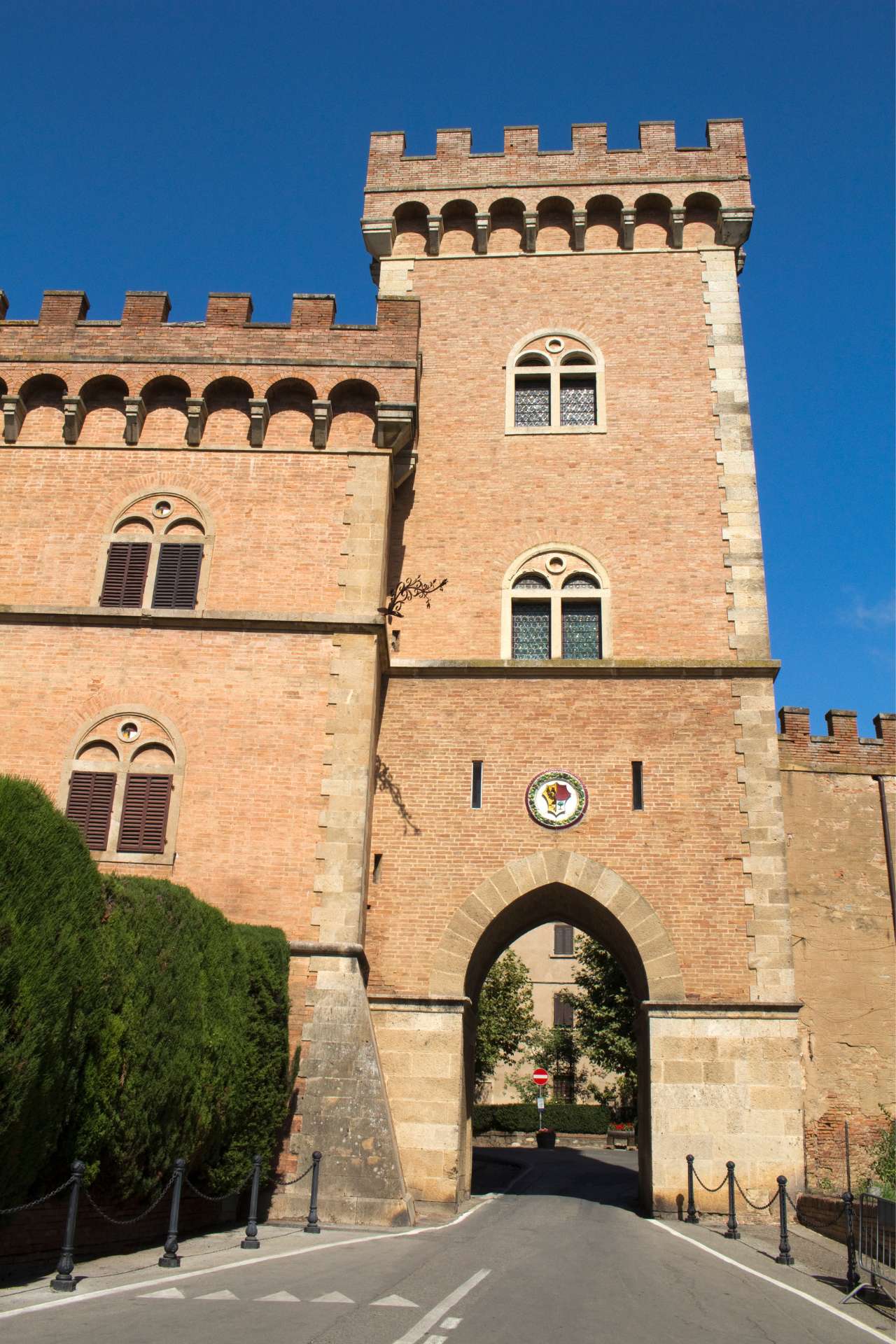
The village and the Castello di Bolgheri
At the end of the avenue you enter the village through the gate of the Castello di Bolgheri, the former residence of the Della Gherardesca counts. The castle is privately owned and cannot be visited inside, but its façade with battlements, narrow windows and thick walls still tells its story.
Inside the walls, the village of Bolgheri is a small tangle of lanes and squares, with wine bars, restaurants, craft shops and local produce. You can walk around it in less than an hour, but it is worth stopping for a glass of local wine.
Bolgheri and its wine
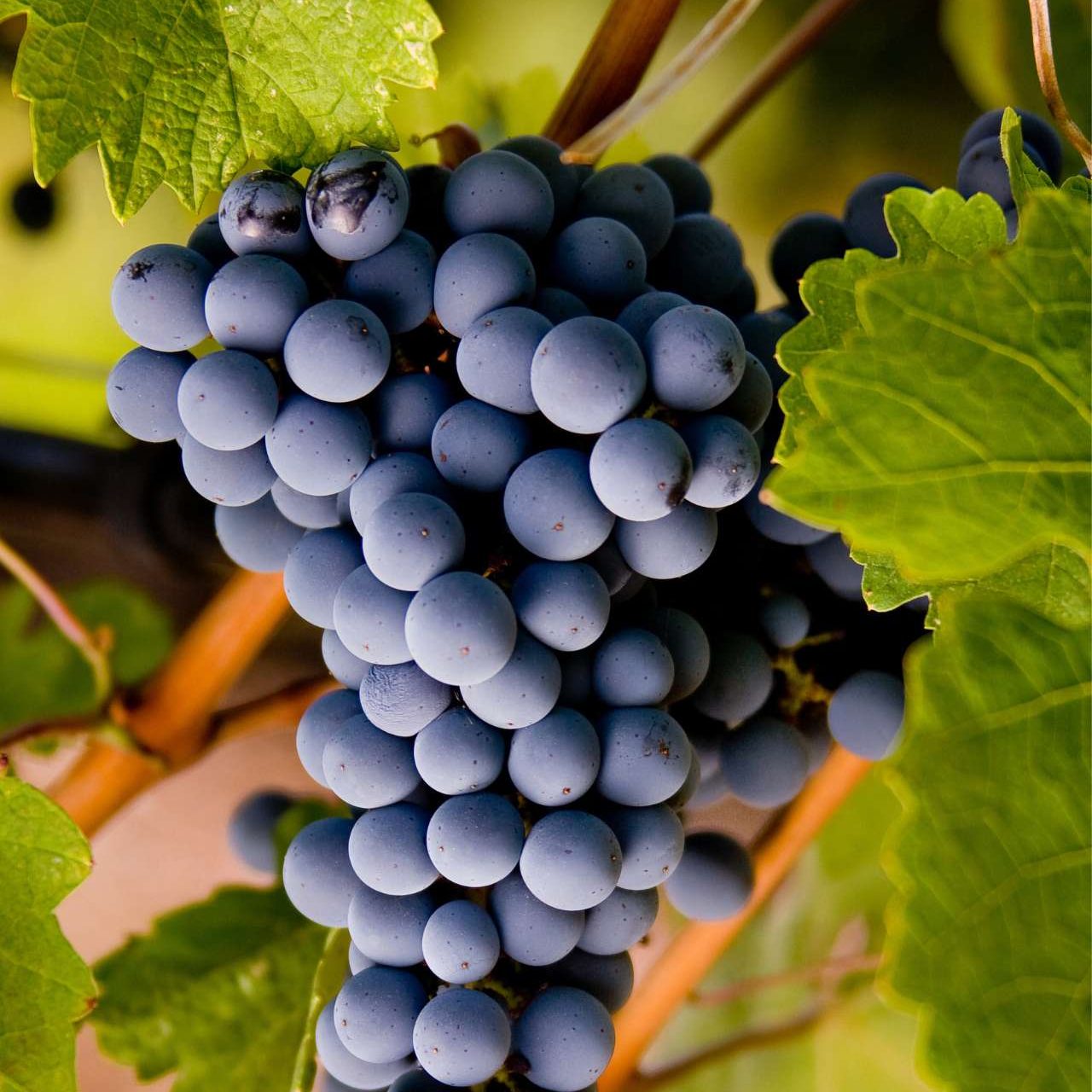
Today Bolgheri is one of the most famous wine regions in the world. The Bolgheri DOC appellation mainly covers red wines from Cabernet Sauvignon, Merlot and Cabernet Franc, grown on hills overlooking the sea.
This is the birthplace of legendary labels such as Sassicaia, produced by Tenuta San Guido and the first Italian appellation reserved for a single estate, and Ornellaia. Around these names a whole constellation of wineries, large and small, has grown up.
Tastings and winery tours
Many estates on the Strada del Vino (Wine Route) open their doors for tours and tastings, almost always by reservation. You will find ideas in the experiences section.
Things to do in and around Bolgheri
- Taste the wines in the village wine bars or at the local wineries.
- Cycle among the vineyards, along the roads linking Bolgheri to Castagneto Carducci.
- Visit Castagneto Carducci, a few kilometres away, with its castle and sea-view terrace.
- Head to the beach on the coast, about ten minutes’ drive away.
- Explore the Padule di Bolgheri nature reserve, one of the first protected areas in Italy, created to safeguard migratory birds.
When to visit Bolgheri
Bolgheri is lovely all year round. Spring and autumn are the best times: mild weather, colourful hillsides and, in September and October, the grape harvest. In summer the village is very busy, especially in the evening: arrive early or at sunset and combine your visit with time at the beach.
Getting there and parking
From the Variante Aurelia dual carriageway, follow the signs for Bolgheri to reach the old Aurelia; here, by the Oratorio di San Guido, the Viale dei Cipressi begins. The village is explored on foot: leave your car in the car parks just outside the walls, which fill up quickly on summer weekends.

A perfect stop on your holiday
Bolgheri pairs perfectly with Castagneto Carducci for a day of villages, cypresses and wine. If you are staying in the Val di Cornia, it is about half an hour away and easy to alternate with the beaches of San Vincenzo and Rimigliano Beach, or with other wine villages such as Suvereto.
Plan your stay
Plan your experience with Ama Campiglia Marittima
On the Ama Campiglia Marittima portal you can find out where to stay, where to eat and which experiences to enjoy between the sea, villages and vineyards, for a holiday half an hour from Bolgheri.
Get a quoteFrequently asked questions about Bolgheri
Where is Bolgheri?
In Tuscany, in the province of Livorno, on the Etruscan Coast. It is a hamlet of the municipality of Castagneto Carducci.
Is Bolgheri a municipality?
No, Bolgheri is a hamlet of Castagneto Carducci, the municipality named after the poet Giosuè Carducci.
What is there to see in Bolgheri?
The Viale dei Cipressi (Cypress Avenue), the Oratorio di San Guido, the village with its castle and the Bolgheri DOC wineries.
How long is the Viale dei Cipressi?
About 5 kilometres, from the Oratorio di San Guido on the old Aurelia up to the village, with some 2,400 cypress trees.
What is Bolgheri famous for?
For the Viale dei Cipressi celebrated by Carducci in Davanti San Guido and for its wines, such as Sassicaia and Ornellaia.
How much time do you need to visit Bolgheri?
Two or three hours for the village and the avenue; half a day with a winery tasting.
Is Bolgheri close to the sea?
Yes, the coast is a few kilometres away, about ten minutes by car.
How far is Bolgheri from Campiglia Marittima?
About half an hour by car, via the Variante Aurelia.
Photo credits (via Wikimedia Commons): Mongolo1984: The octagonal Oratorio di San Guido at the start of Bolgheri’s Viale dei Cipressi (CC BY-SA 4.0).


